Your brakes are the single most critical safety system on your vehicle, and Metro Detroit roads are not forgiving. Between the freeze-thaw cycles that destroy pavement, the stop-and-go on I-75 and M-59, and the salt corrosion that eats brake components every winter, Michigan drivers put their brakes through conditions most states never see. According to the National Highway Traffic Safety Administration, brake-related issues contribute to roughly 22% of vehicle crashes caused by mechanical failure. If you have been ignoring that grinding sound or that soft pedal feel, you are gambling with your family’s safety. Here is exactly what to watch for, and when to bring your vehicle in for brake service Troy MI residents can count on.
Table of Contents
- Quick Takeaways
- Warning Sign 1: Squealing or Squeaking Brakes
- Warning Sign 2: Grinding Noise When Braking
- Warning Sign 3: Brake Pedal Feels Soft or Spongy
- Warning Sign 4: Vehicle Pulls to One Side When Braking
- Warning Sign 5: Brake Warning Light Stays On
- Comparison of Brake Service Approaches
- How Michigan Weather Accelerates Brake Wear
- Frequently Asked Questions
- References
Quick Takeaways
| Key Insight | Explanation |
|---|---|
| Squeaking often means worn pad indicators | Brake pads have built-in metal wear indicators that squeal when pads reach 2-3mm thickness. Do not ignore this signal. |
| Grinding means metal-on-metal contact | Once you hear grinding, the pad material is gone. Rotors are being damaged and costs escalate quickly without immediate service. |
| Soft pedal indicates fluid or hydraulic issues | A spongy pedal can mean air in the brake lines or a master cylinder leak. Both are immediate safety hazards requiring same-day inspection. |
| Pulling while braking points to uneven wear or a stuck caliper | A seized caliper on one side creates uneven braking force, which can cause loss of control at highway speeds on Metro Detroit freeways. |
| Michigan road salt corrodes brake components faster than average | Brake calipers, rotors, and brake lines corrode significantly faster in Michigan winters. Annual brake inspections are the minimum standard here. |
| Brake warning light is not a “check back later” signal | A lit brake warning light in most vehicles indicates low brake fluid or a hydraulic pressure imbalance. Schedule service within 24-48 hours at most. |
| Brake specials Metro Detroit can save you hundreds | Catching brake issues early, during a free inspection or brake special, typically costs 40-60% less than waiting until rotor replacement is also required. |
Warning Sign 1: Squealing or Squeaking Brakes
Squeaking brakes are the brake system’s built-in early warning system, and most drivers in Michigan make the mistake of dismissing this sound as “just the weather.” In practice, cold mornings can cause brief surface rust squealing that clears after the first few stops. But if that squeal persists after the car has warmed up and you have braked several times, it is almost certainly the wear indicator on your brake pads doing exactly what it was designed to do.
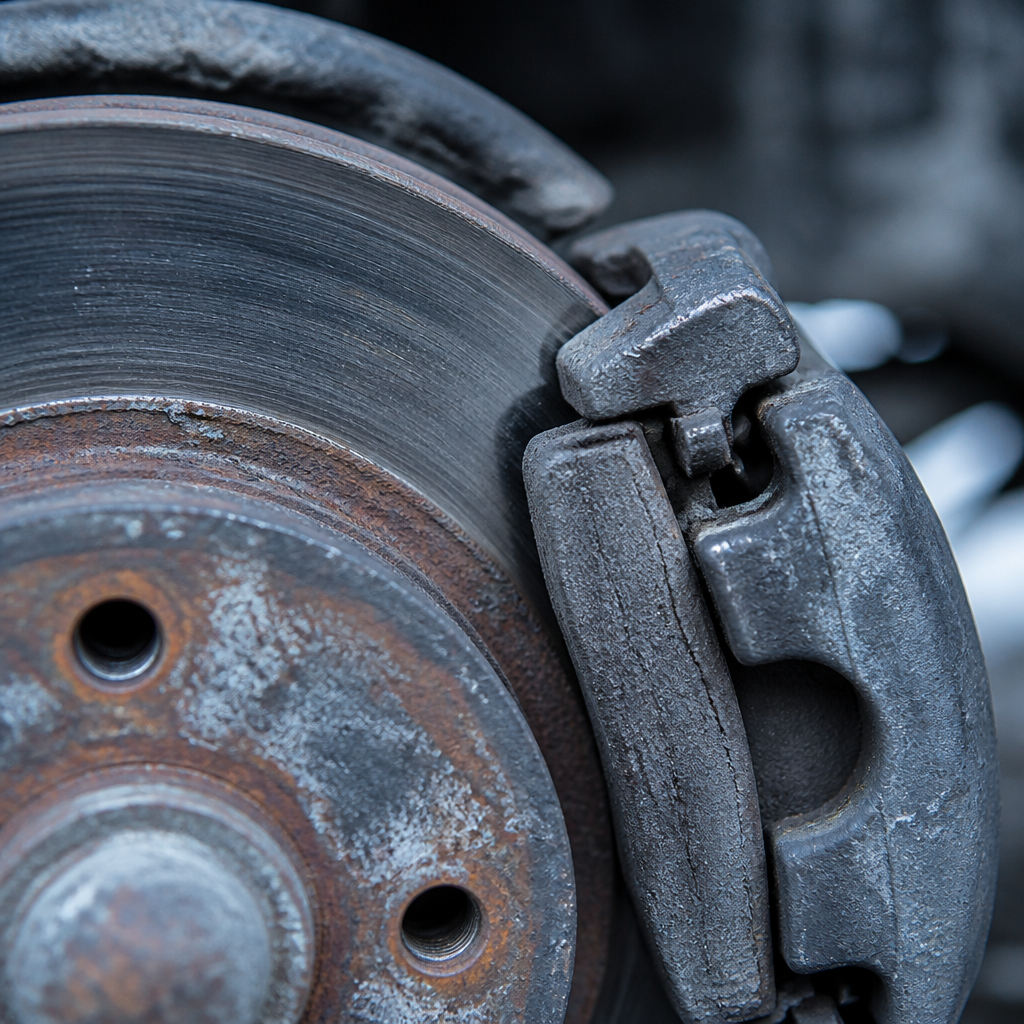
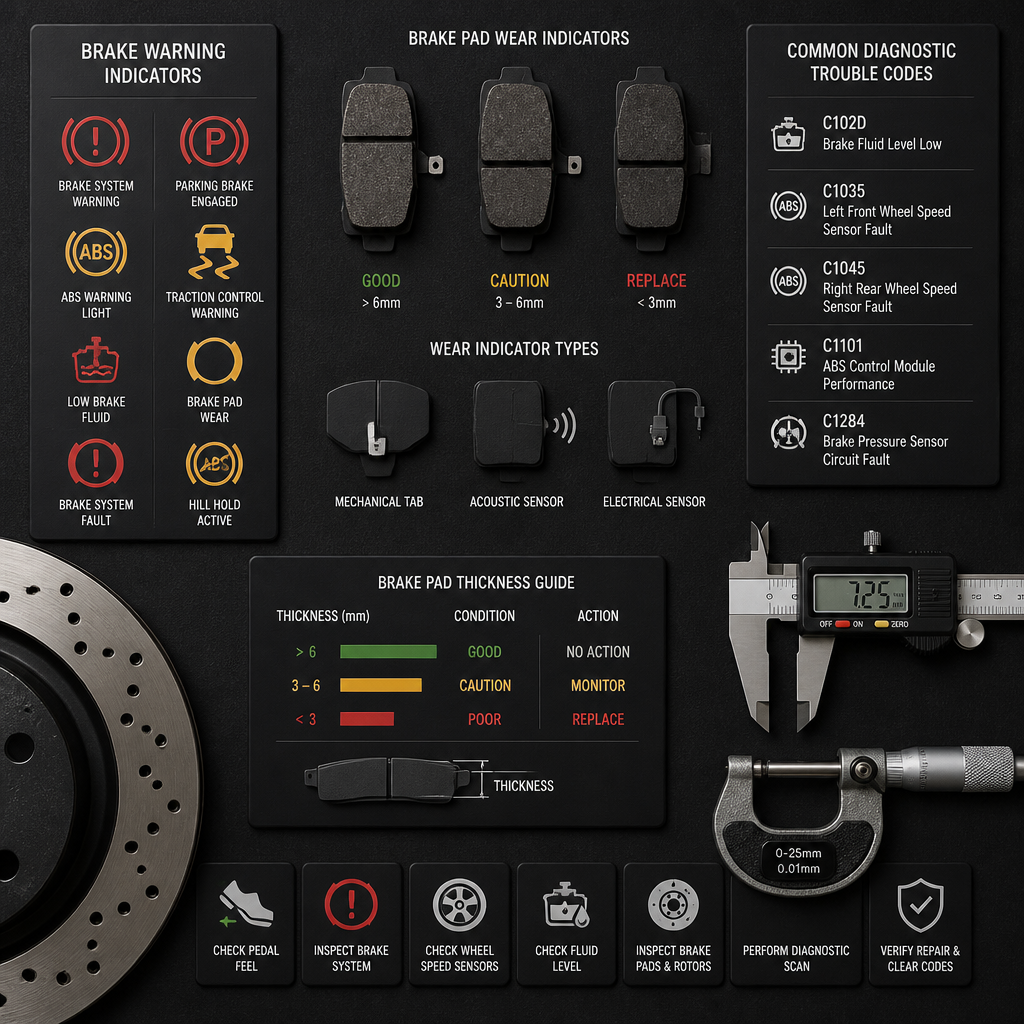
Brake pad wear indicators are small metal tabs attached to the pad backing plate. When the friction material wears down to approximately 2-3mm, the tab contacts the rotor and produces that high-pitched squeal. This is not a coincidence and it is not road noise. It is a calibrated alert engineered by the manufacturer.
What Happens If You Keep Driving on Squealing Brakes
Ignore the squeal for another 500 to 1,000 miles and the wear indicator stops squealing because the pad material is now completely gone. The metal backing plate contacts the rotor directly, and squealing turns into grinding. At that point, rotor replacement is typically unavoidable, which adds $150 to $300 per axle to the repair bill compared to a simple pad replacement.
If you are driving in Shelby Township, Troy, or anywhere across Metro Detroit and you hear persistent squeaking during normal braking, bring the vehicle in for a brake repair Shelby Township inspection before that sound changes to something worse.
Pro tip: If your brakes squeal only during the first 1-2 stops of the morning and then go silent, that is typically surface rust burning off overnight moisture and is normal for Michigan vehicles. Squealing that continues through every stop is not normal and needs a technician’s eyes on it.
Warning Sign 2: Grinding Noise When Braking
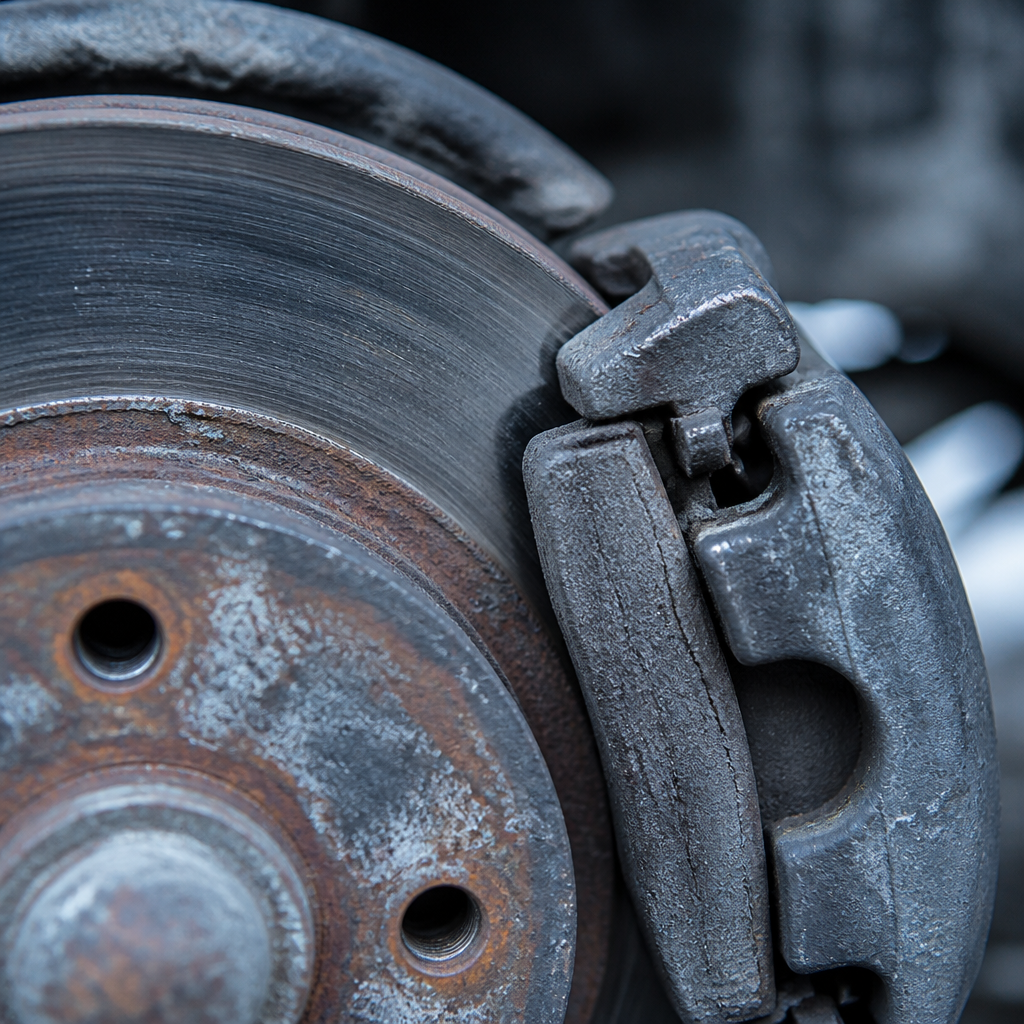
Grinding is the sound of money leaving your wallet and, more importantly, the sound of a safety problem developing in real time. When brake pads are fully worn through, the metal backing plate or the wear indicator post digs directly into the brake rotor’s surface. Every stop scores the rotor, creating deep grooves that compromise braking efficiency and generate heat inconsistencies that can cause brake fade.
The data consistently shows that drivers who schedule service when they hear grinding rather than squealing spend an average of 35-50% more on their brake repair because rotor resurfacing or replacement is now required in addition to new pads. In many cases, grinding also damages brake calipers if the metal contact continues long enough.
Grinding vs. Squealing: How to Tell the Difference
Squealing is high-pitched and often intermittent, especially in wet weather. Grinding is a low, harsh metallic scraping sound that you can sometimes feel through the brake pedal as well as hear. If you feel vibration through the pedal while also hearing a grinding sound, the rotor surface is already compromised and needs immediate inspection.
For families in Waterford, Utica, or Rochester driving on heavily trafficked roads like M-59 or Auburn Road, do not attempt to stretch a grinding brake situation across a few more weeks. Schedule a brake inspection Waterford MI appointment the same week you first notice the sound.
“Brake rotors that show deep scoring from metal-on-metal contact must be replaced rather than resurfaced, because machining them below minimum thickness creates a dangerous heat dissipation failure point.” — ASE Certified Master Technician guidance published by the Automotive Service Excellence organization
Warning Sign 3: Brake Pedal Feels Soft or Spongy
A properly functioning brake pedal should feel firm and responsive with consistent resistance throughout its travel. If you press the brake pedal and it sinks lower than usual before the vehicle slows, or if it has a spongy, compressible feel rather than a solid one, the hydraulic side of your brake system has a problem. This is categorically more urgent than worn pads.
The most common causes of a soft brake pedal are air in the brake lines, a failing master cylinder, or a hydraulic fluid leak somewhere in the system. Air is compressible. Brake fluid is not. When air enters the lines, the pedal compresses that air instead of transmitting full hydraulic force to the calipers, and braking distance increases significantly.
Brake Fluid Leaks and Michigan Road Conditions
Michigan’s road salt and freeze-thaw cycles accelerate corrosion of brake lines, especially on vehicles older than 6-7 years. Corroded steel brake lines are a known failure point on Metro Detroit vehicles. A small pinhole leak in a brake line may produce minimal symptoms at first, but under hard braking the system can lose pressure rapidly.
If your pedal travels more than two-thirds of the way to the floor before the car stops effectively, treat this as a same-day emergency repair. Do not drive at highway speeds. Get the vehicle inspected for hydraulic brake system integrity immediately.
Pro tip: Check your brake fluid reservoir under the hood. If the level is noticeably below the “MIN” line, you have either a leak in the system or severely worn brake pads (worn pads allow caliper pistons to extend further, drawing fluid from the reservoir). Either scenario requires a professional inspection, not just a fluid top-off.
Warning Sign 4: Vehicle Pulls to One Side When Braking
If your vehicle tracks straight during normal driving but pulls noticeably left or right the moment you apply the brakes, the braking force is uneven between the two sides of an axle. This is not a minor annoyance. At 70 mph on I-696 or I-75, uneven braking can cause a sudden directional lurch that is very difficult to correct.
The most frequent culprits for brake pull are a seized or sticking caliper on one side, brake pads that have worn unevenly, contaminated brake pads on one side (from an oil or fluid leak), or a collapsed brake hose that allows pressure on one side but restricts it on the other. A sticking caliper applies constant partial braking force even when you are not pressing the pedal, which also causes premature wear and overheating.
When Alignment Is Not the Real Problem
A common mistake is assuming brake pull is a wheel alignment issue. Alignment pull happens all the time, not only under braking. If the pull appears specifically and only when you apply the brakes, alignment is not the primary cause. Some shops will sell an alignment service when the actual issue is a brake caliper or hydraulic imbalance. A proper brake inspection will separate these two causes quickly.
At Car Aid’s locations in Troy, Shelby, Waterford, and across Metro Detroit, our technicians test brake balance as part of every brake inspection, measuring rotor thickness and caliper operation on both sides of each axle before making any recommendations.
Warning Sign 5: Brake Warning Light Stays On
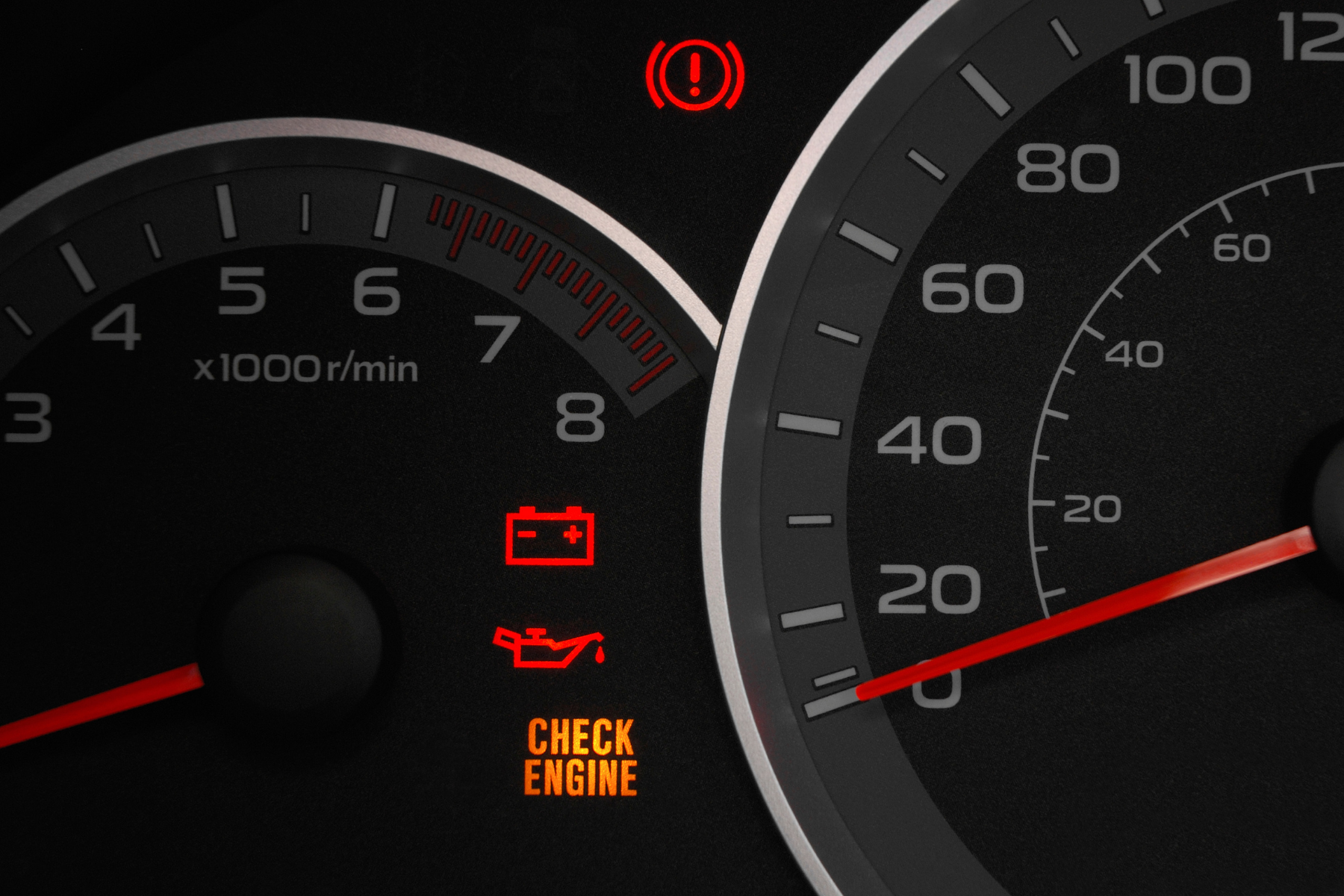
Modern vehicles have two brake-related warning indicators. The red brake warning light typically signals a low brake fluid level, the parking brake being left engaged, or a detected hydraulic pressure imbalance between the front and rear brake circuits. The amber ABS warning light signals a fault in the Anti-lock Braking System sensors or module. Both require attention, but a lit red brake light is the more immediately urgent of the two.
A red brake warning light that illuminates while driving and stays on is not something to monitor for a few days. The most likely cause, low brake fluid, almost always means either the pads are severely worn or there is a leak in the hydraulic system. Both of those scenarios progressively worsen with every mile driven.
ABS Warning Light: Less Urgent but Not Ignorable
An ABS warning light means the anti-lock braking system has been disabled. Your brakes will still work, but your vehicle loses the protection of ABS in emergency stops on Michigan’s wet or icy roads. For a family vehicle driving through a Waterford winter or navigating a sudden stop on a slushy M-59, losing ABS function is a meaningful safety reduction. Get the ABS fault code diagnosed within a week.
Car Aid uses professional-grade OBD diagnostic tools at all six Metro Detroit locations to pull brake-related fault codes accurately. This means you get a specific answer about what triggered the warning light rather than a generic guess.
Comparison of Brake Service Approaches
Not all brake service options are the same, and Metro Detroit drivers deserve to understand the difference between what they are being offered before they commit to a service. The table below compares three common approaches you will encounter when searching for brake specials Metro Detroit.
| Service Approach | What It Includes | Best For |
|---|---|---|
| Free Brake Inspection Only | Visual check of pad thickness and rotor condition, no hydraulic system check, no caliper assessment. Takes 10-15 minutes. | Early warning detection before symptoms appear. A good starting point but not a complete evaluation. |
| Brake Pad Replacement (Pads Only) | Replaces worn friction material on one or both axles. Rotors are cleaned but not resurfaced or replaced. Calipers are inspected visually. | Vehicles with pads at or below 3mm, rotors still within manufacturer thickness specs, no symptoms of hydraulic issues. |
| Full Brake Service (Pads, Rotors, and System Check) | Replaces pads and rotors, checks and lubricates caliper slide pins, inspects brake hoses and lines, checks brake fluid condition and level, tests hydraulic system pressure. | Vehicles showing multiple warning signs, high-mileage Michigan vehicles with road salt exposure, vehicles with any soft pedal or pulling symptoms. |
In practice, Michigan vehicles driven through 5 or more winters frequently need full brake service rather than pad-only replacement because of corrosion to caliper hardware and brake line surfaces that a pad swap alone does not address.
How Michigan Weather Accelerates Brake Wear
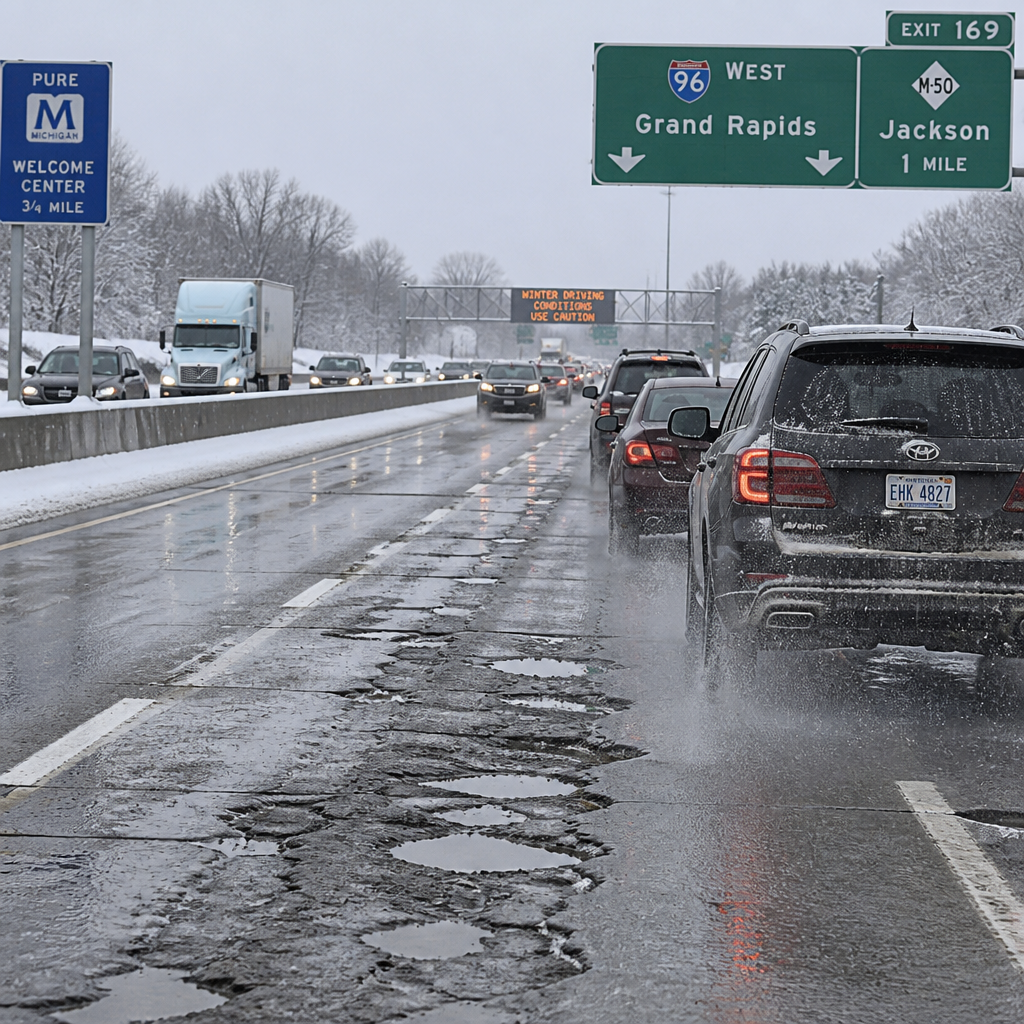
Michigan’s climate creates brake wear conditions that are genuinely more aggressive than most of the continental United States. The combination of road salt application from November through March, freeze-thaw cycling that creates constant surface moisture, and spring pothole season that forces hard braking patterns adds up to measurably shorter brake component lifespans compared to vehicles in drier or warmer climates.
Road salt (sodium chloride and calcium chloride) is hygroscopic, meaning it attracts and retains moisture. When this brine coats brake rotors and calipers, it accelerates oxidation. Brake rotors on Metro Detroit vehicles often show surface corrosion after just two or three days of non-use in winter. Caliper slide pins corrode and seize at higher rates in Michigan than in states without heavy salting programs.
What Michigan Drivers Should Do Differently
The standard recommendation of inspecting brakes every 12,000 miles or once per year is a national average guideline. For vehicles in Southfield, Troy, Shelby Township, Utica, Waterford, and Rochester, a brake inspection at every oil change (every 5,000 to 7,500 miles) is the more appropriate standard. This is not upselling. It is adapting the maintenance schedule to actual operating conditions.
High-quality brake pads with ceramic or semi-metallic compounds also perform better in Michigan’s wet and cold conditions than economy organic pads, which lose effectiveness more quickly when wet. The difference in performance under hard emergency braking on a wet road in Shelby Township is not theoretical. Ask about compound options when you schedule your next brake repair Shelby Township service.
Pro tip: After every winter season, have your caliper slide pins inspected and re-lubricated. Corroded slide pins are one of the most common causes of uneven brake wear and premature rotor failure on Michigan vehicles, and the service typically takes less than 30 minutes as part of a brake inspection appointment.
Frequently Asked Questions
How often should I get a brake inspection if I drive in Metro Detroit?
For Metro Detroit vehicles, a brake inspection at every oil change interval is the right standard, not once per year. Michigan road salt and stop-and-go commuter traffic in areas like Southfield, Troy, and Utica create accelerated wear patterns. Catching pad thickness or caliper issues early saves significant money and prevents safety failures.
What is the difference between squeaking brakes and grinding brakes?
Squeaking brakes in Michigan are often the wear indicator making contact with the rotor, signaling you have some time but not much. Grinding is the sound of the metal pad backing plate or wear indicator post digging into the rotor itself, meaning the pad material is completely gone. Grinding requires immediate service because rotor damage is already happening with every stop.
Can I drive my car if the brake warning light is on?
If the red brake warning light is on and your parking brake is fully released, you should not drive at highway speeds or take long trips. The most likely cause is low brake fluid due to worn pads or a system leak. Driving in this condition risks a gradual loss of braking effectiveness. Schedule service within 24-48 hours at most, and drive conservatively in the meantime.
Why does my car pull to one side when I brake but drive straight otherwise?
Pulling specifically under braking, rather than during normal driving, almost always indicates a brake system issue rather than an alignment issue. The most common causes are a seized caliper applying uneven force, unevenly worn brake pads, or a collapsed brake hose on one side restricting fluid flow. A brake inspection will identify which component is causing the imbalance.
Are brake specials in Metro Detroit worth it, or do they lead to upselling?
Free brake inspections from a reputable shop are genuinely useful because they catch problems before they become expensive. The key is working with a shop that shows you the measurement data (pad thickness in millimeters, rotor thickness vs. minimum spec) rather than just telling you what needs replacing. At Car Aid, technicians document findings so you can see exactly what the brake system looks like before any work is approved.
How much does a typical brake service cost in Michigan?
Brake pad replacement on one axle typically runs $150 to $250 depending on the vehicle and pad compound. Full brake service including pads and rotors on one axle typically runs $250 to $450. Waiting until you hear grinding rather than squealing usually adds $150 to $300 to the total bill per axle because rotor damage requires resurfacing or replacement that would not have been needed with earlier service.
Does Car Aid offer brake service at all Metro Detroit locations?
Yes. Car Aid provides full brake inspections, brake pad replacement, rotor service, and hydraulic system checks at all six Metro Detroit locations including Southfield, Troy, Shelby, Utica, Waterford, and Rochester. Certified technicians at each location use the same diagnostic standards and quality parts across all sites.
If you have experienced any of the warning signs described here or you are simply overdue for a brake inspection, share your experience in the comments below, we would like to know what brake symptoms Metro Detroit drivers are seeing most this season.
We would love your feedback and any insights you would share with others. What perspective would you add?
References
- National Highway Traffic Safety Administration: Federal vehicle safety data and brake-related crash statistics for U.S. drivers
- ASE (Automotive Service Excellence): Brake system inspection and technician certification standards used across the auto repair industry
- Statista: Automotive maintenance cost data and vehicle repair frequency statistics in the United States
- Forbes Wheels: Automotive consumer guidance on brake repair costs and maintenance best practices for vehicle owners
- Michigan Department of Transportation: Road condition data, winter maintenance operations, and salt application statistics for Michigan roadways