
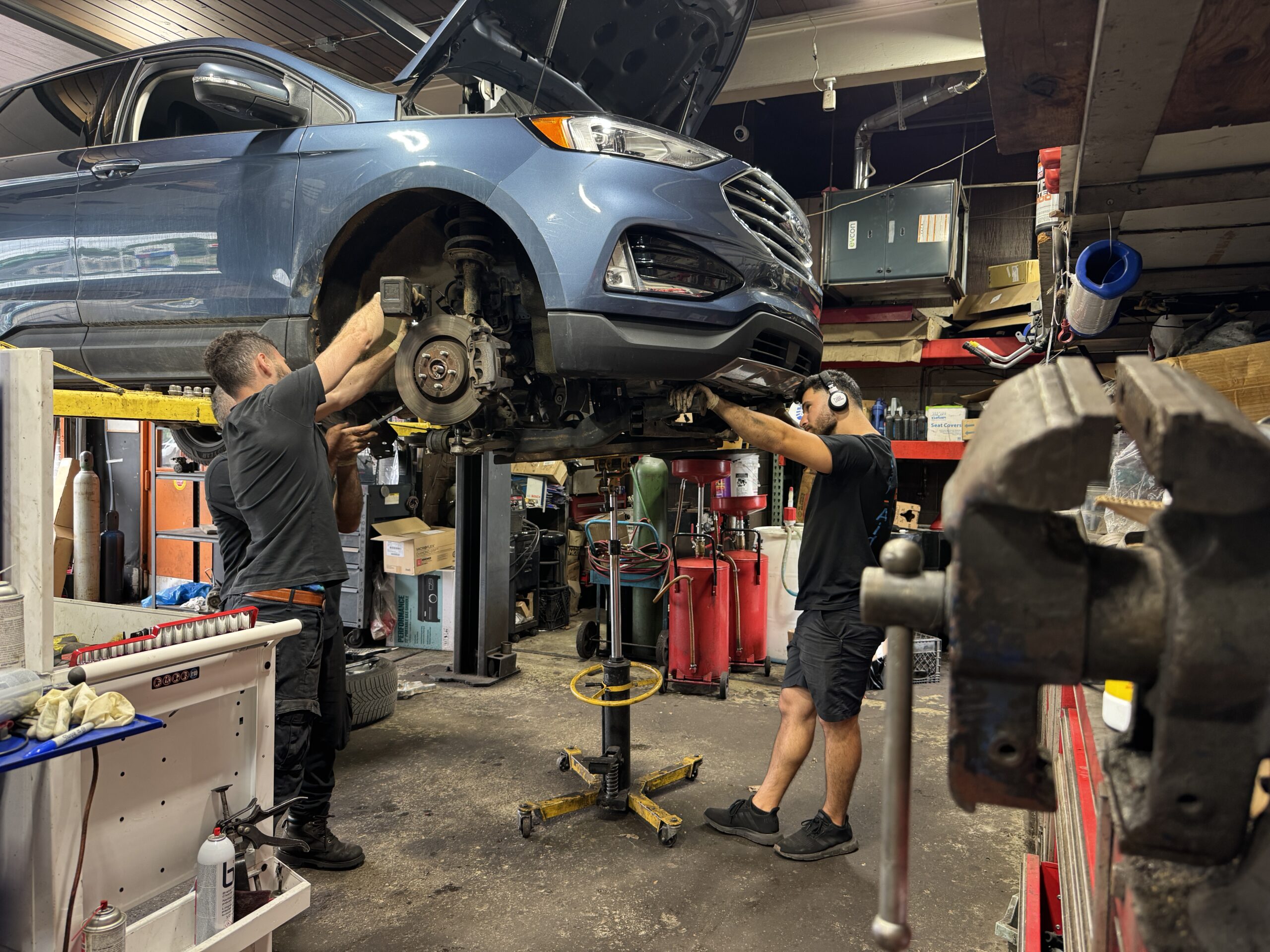
A brake repair diagnostic in Metro Detroit starts with the symptom
you feel, then measures pad thickness, rotor condition, calipers, and
fluid before anyone quotes parts. At Car-Aid, ASE-certified techs
document wear with photos so you see pad millimeters and rotor surface,
not only a dollar total, at six shops across Troy, Southfield, Shelby
Township, Waterford, and Rochester.
Why Metro Detroit
brakes wear the way they do
Michigan salt, freeze-thaw cycles, and potholes on I-75, M-59,
Telegraph, and Woodward put hard stop-and-go loads on pads and rotors.
Salt holds moisture against hardware and can seize slides or accelerate
rust on rotor edges. A soft pedal after a long commute can be fluid or
air. Grinding can indicate worn brake pads or another brake problem that
needs prompt inspection.
Symptom lists help. They do not replace a measured inspection. Squeal
can be a wear indicator or glazed pads. Pull can be a caliper, hose, or
tire pressure issue. Vibration under braking often points to rotor
thickness variation, not always “new pads only.”
What Car-Aid
checks during a brake diagnostic
- Confirm the complaint. Advisor notes when it
happens: cold start, highway stops, low speed, after rain, with ABS
light, or only when the parking brake is used. - Road and safety check. Tech verifies pedal feel,
warning lights, and obvious leaks before the wheels come off. - Wheel-off inspection. Pads measured for remaining
friction material. Rotors checked for thickness against spec, grooves,
heat spots, and edge rust common after salted winters. - Hardware and hydraulics. Caliper movement, slide
pins, hoses, and fluid condition. Seized hardware can eat a new pad set
in weeks. - Photo and digital report. You see pad thickness and
rotor condition on screen. The estimate ties each line to what the
photos show. - Priority split. Do now (metal-on-metal, fluid loss,
unsafe stop), schedule soon (thin pads, rotor-related vibration), or
monitor (healthy thickness, light surface rust that cleans under normal
use).
A scan tool is not a full brake diagnostic by itself. Codes help when
ABS or brake lights are on. Pad and rotor decisions still need eyes and
a micrometer on the parts.
How a transparent
brake estimate should read
Expect separate lines for pads, rotors (machine or replace),
hardware, labor, and fluid service when needed. A solid quote states
measured wear, not only “brakes are bad.”
Watch for:
- One bundled “brake job” price with no pad mm or rotor thickness
- Pads quoted without checking caliper slides or pins
- Same-day pressure with no written copy or photos
- Both axles sold when only one axle shows the wear that matches your
symptom (sometimes both axles need work; the report should show
why) - No warranty language on parts and labor
Car-Aid writes the estimate before labor starts. You approve the plan
with the photos in front of you.
Warranty and who does the
work
Qualifying brake repairs at Car-Aid carry a 2-year /
24,000-mile warranty. Advisors explain coverage before parts
are ordered. Technicians are ASE-certified. That
matters on diagnostics because the goal is root cause (hardware, fluid,
rotor condition), not a menu upsell that ignores a stuck caliper.
If another shop already quoted you, bring the estimate for a
complimentary second-opinion review.
Six Metro Detroit
shops (pick the closer bay)
| Shop | Address | Phone |
|---|---|---|
| Troy | 1921 Brinston Dr, Troy, MI 48083 | (248) 595-8224 |
| Southfield | 24125 Telegraph Rd, Southfield, MI 48033 | (248) 809-9408 |
| Shelby 23 Mile | 5000 23 Mile Rd, Shelby Township, MI 48316 | (586) 323-2120 |
| Shelby Van Dyke | 46230 Van Dyke Ave, Shelby Township, MI 48317 | (586) 731-1790 |
| Waterford | 4860 Highland Rd, Waterford, MI 48328 | (248) 461-2355 |
| Rochester | 202 South St, Rochester, MI 48307 | (248) 651-6339 |
Book the shop closest to home or work: aops.cc/car-aid-website.
Brake service hub: caraidnow.com/services/brakes/.
What symptoms
mean I need a brake inspection now?
Grind, metal-on-metal noise, a pedal that sinks, a hard pull to one
side, a brake warning light, or much longer stopping distance. Have
these symptoms checked promptly. If the pedal sinks, stopping distance
increases significantly, or the vehicle feels unsafe to drive, do not
drive it. Arrange a tow and contact the shop.
Do I always need new
rotors with new pads?
No. Rotors stay when thickness is in spec, the surface is true enough
for the pad, and vibration is absent. Rotors below minimum thickness or
cracked need replacement. Depending on their measured condition and
manufacturer specifications, grooved or pulsating rotors may be machined
or replaced. The photo report should show the reason.
How long does a
Car-Aid brake diagnostic take?
Most inspections fit a normal service visit once the car is in a bay.
Full pad and rotor replacement time depends on axle count and seized
hardware. Your advisor gives a time window with the written
estimate.
Will salt damage show
up only in winter?
Salt accelerates rust and stuck hardware year-round after exposure.
Problems often surface in fall and spring when stop-and-go and
temperature swings return. A fall inspection before the first hard
freeze catches thin pads while you still have quiet miles left.
Next step
Describe the noise or pedal feel, book the closest Car-Aid shop, and
ask for a photo brake inspection. You leave with measured wear, a clear
do-now vs later list, and a written estimate before any repair
starts.