Michigan summers are brutal on brake systems. Between stop-and-go traffic on I-75, the heat radiating off suburban asphalt, and the lingering effects of a winter full of road salt, Metro Detroit vehicles take a beating that most drivers underestimate. According to the National Highway Traffic Safety Administration, brake failure contributes to roughly 22% of vehicle crash fatalities annually. If you have been searching for brake service Southfield MI, there is a good chance something already feels off. This article gives you the seven clearest warning signs that your brakes need professional attention right now, not next month.
Table of Contents
- Quick Takeaways
- Sign 1: Squealing or Squeaking Noise When Braking
- Sign 2: Grinding Metal-on-Metal Sound
- Sign 3: Vibrating or Pulsating Brake Pedal
- Sign 4: Car Pulling to One Side When Braking
- Sign 5: Longer Stopping Distances Than Normal
- Sign 6: Brake Warning Light on Dashboard
- Sign 7: Burning Smell After Highway Driving
- Brake Problem Severity: Quick Comparison
- Why Summer Is Especially Hard on Metro Detroit Brakes
- Frequently Asked Questions
- References
Quick Takeaways
| Key Insight | Explanation |
|---|---|
| Squealing usually means worn brake pads | Most pads include a metal wear indicator that produces a high-pitched sound when the pad material is nearly gone. Do not ignore it for more than a few days. |
| Grinding means metal-to-metal contact | Once you hear grinding, the pad is gone and the rotor is being damaged. Repair costs jump significantly at this stage. |
| Pedal pulsation points to warped rotors | Summer heat and repeated hard stops on Michigan highways warp rotors faster than most drivers expect. Resurfacing or replacement is the only fix. |
| Pulling to one side signals uneven wear or a stuck caliper | A caliper that is not releasing fully creates uneven braking force, which is dangerous at highway speeds on I-696 or M-59. |
| The brake warning light is never a false alarm to ignore | Modern vehicles use sensors to detect low pad thickness or hydraulic pressure loss. If the light is on, schedule service that day. |
| Longer stopping distances are a safety emergency | The NHTSA recommends a stopping distance of roughly 130 feet at 60 mph on dry pavement. If your car needs more than that, your brakes are failing. |
| A burning smell after driving means overheated brake components | This is common on summer highway drives through Metro Detroit. Overheated brake fluid can boil and cause complete brake fade. |
Sign 1: Squealing or Squeaking Noise When Braking
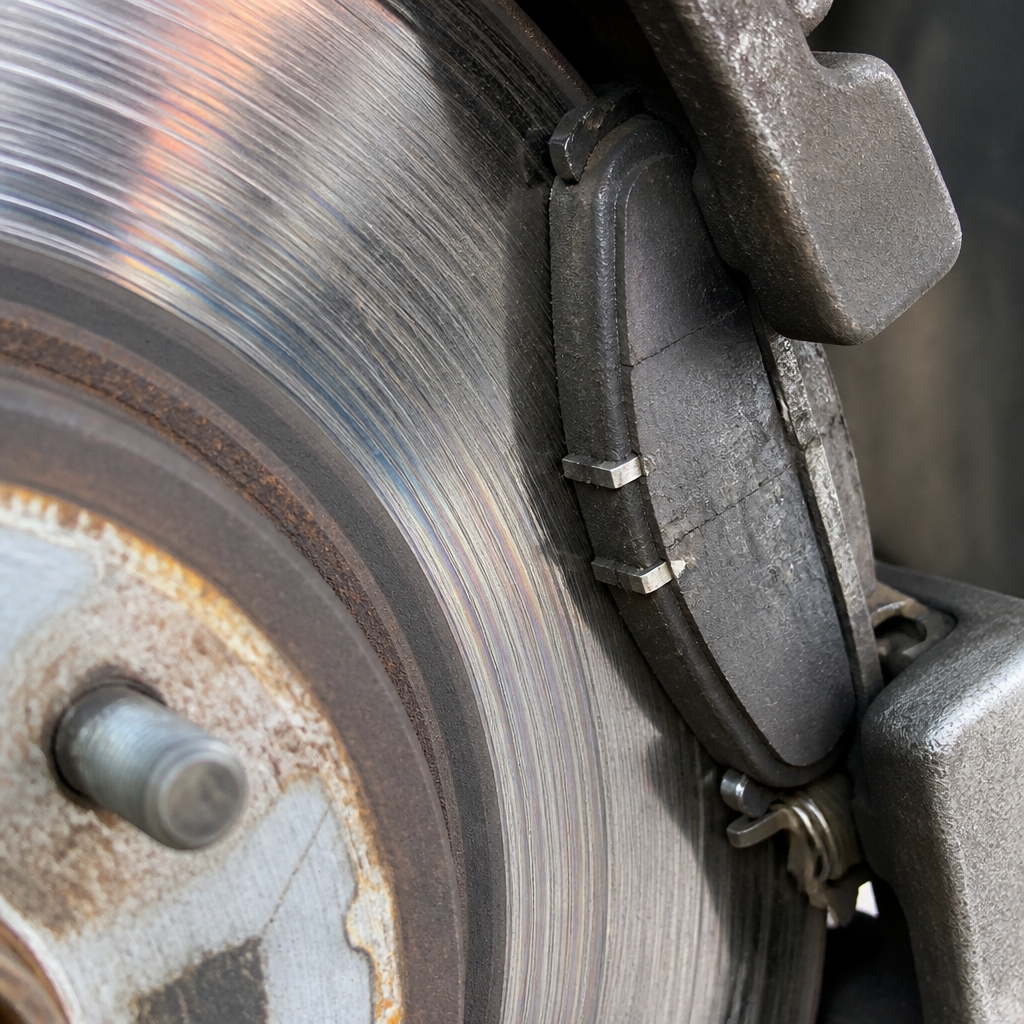
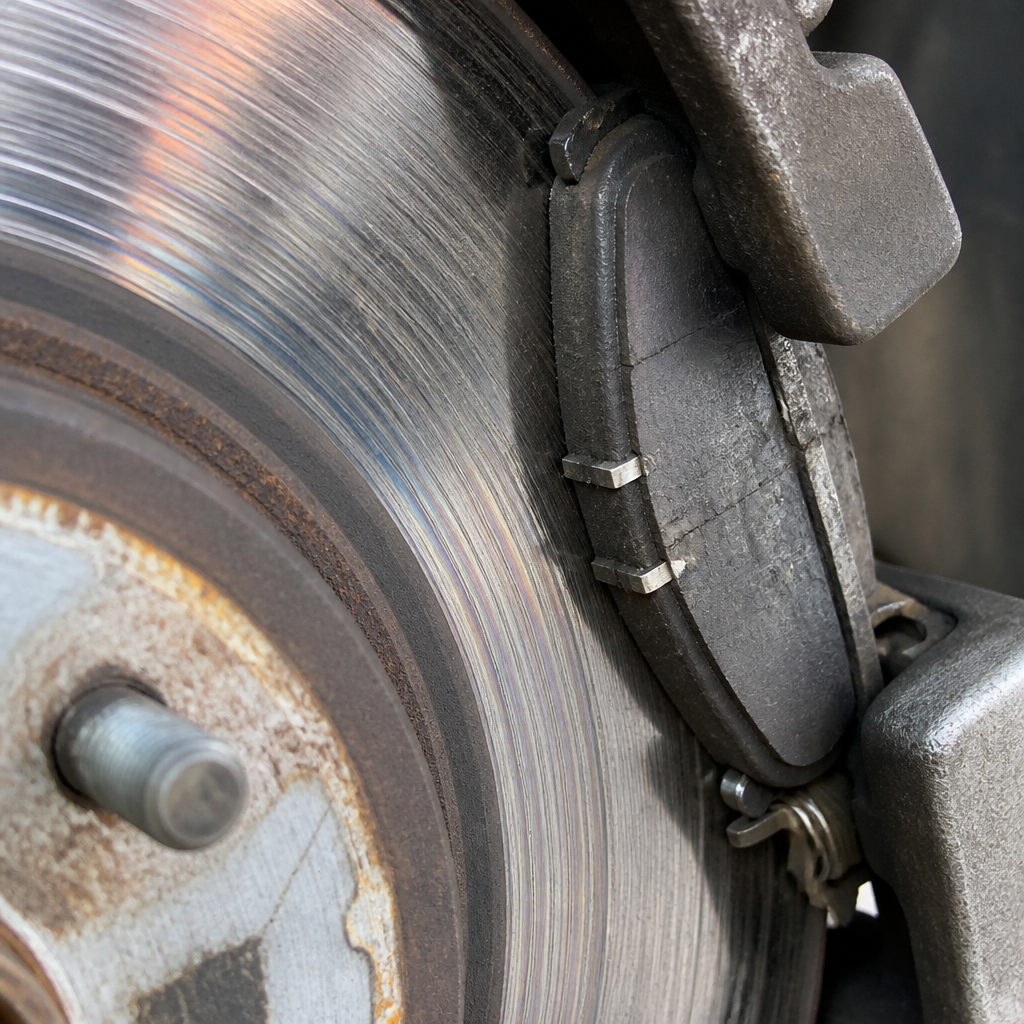
This is the most common early warning sign, and it is one that Metro Detroit drivers frequently dismiss as a minor annoyance. In practice, that squeal is an engineered alert. Most quality brake pads include a small metal tab called a wear indicator. When the friction material wears down to roughly 2-3mm, the tab contacts the rotor and produces that sharp, high-pitched squeal.
The mistake most drivers make is assuming the noise will go away on its own. It will not. The noise gets louder, then transitions into the far more destructive grinding sound described below. At that point, you are no longer looking at a pad replacement. You are looking at pad plus rotor replacement, which can double the repair bill.
Summer conditions make this worse. When brake pads heat up repeatedly in heavy Southfield or Troy traffic, the wear indicator contacts the rotor more consistently, and the squealing becomes constant rather than intermittent. If you hear squealing every time you apply the brakes for more than two or three days in a row, schedule a brake inspection immediately.
Pro tip: If the squealing stops after light rain but returns within a few miles, your pads are not the problem. A thin layer of surface rust on the rotor caused by overnight moisture is normal. However, if squealing persists through dry conditions, treat it as a worn pad signal.
Sign 2: Grinding Metal-on-Metal Sound
Grinding is the sound most brake technicians dread hearing from a customer’s car because it almost always means the problem has moved past simple pad replacement. When the friction material is fully depleted, the metal backing plate of the pad contacts the rotor directly. That contact grinds away rotor material with every stop.
The data consistently shows that drivers who ignore squealing for more than 2-4 weeks frequently end up with scored or grooved rotors. Replacing a rotor adds $150 to $300 per axle to the repair cost, depending on the vehicle. For a family driving an SUV or a larger truck, a standard brake job that should have cost $200 can balloon to $600 or more once rotors are destroyed.
In Metro Detroit specifically, winter road salt accelerates rotor corrosion. By summer, rotors that were already thin going into spring are even more vulnerable to grooving. If your car has more than 40,000 miles on the original brake components and you are hearing grinding, do not attempt to nurse it through the rest of the summer. Schedule brake repair Metro Detroit service immediately.
Sign 3: Vibrating or Pulsating Brake Pedal
A brake pedal that vibrates or pulses under your foot during a stop is a reliable indicator of warped rotors. This is more common in summer than most drivers realize. Repeated aggressive stops from highway speeds, combined with high ambient temperatures, cause rotor surfaces to develop uneven thickness across their surface. When the caliper squeezes an uneven rotor, you feel that unevenness transmitted through the pedal.
The technical term is disc thickness variation, and the NHTSA specifies acceptable thresholds measured in thousandths of an inch. In practice, anything you can feel through the pedal is already beyond acceptable limits.
A common mistake is confusing pedal pulsation with steering wheel vibration. Steering wheel vibration at speed, without braking, usually points to a wheel balance or alignment issue. Pedal pulsation specifically during braking points to rotors. Both issues are handled at Car Aid locations in Southfield, Troy, and the other Metro Detroit locations, but they are separate diagnoses requiring separate fixes.
Pro tip: If you notice the pulsation is worse on the first few stops of a morning drive but smooths out afterward, your rotors may still be in the resurfacing range rather than full replacement. Have a certified technician measure rotor thickness before assuming you need new rotors.
Sign 4: Car Pulling to One Side When Braking
When you apply the brakes and your vehicle drifts noticeably to the left or right, that is not a wheel alignment problem. It is a braking system problem, and it deserves immediate attention. The most common causes are a stuck or seized brake caliper on one side, uneven pad wear between left and right, or a brake hose that has collapsed internally and is restricting fluid flow to one caliper.
A seized caliper is particularly dangerous because it can apply continuous friction to one rotor even when you are not braking. This generates excessive heat, accelerates wear, and in serious cases can cause a wheel fire. On Metro Detroit highways where lane changes at speed are routine, a car that pulls during braking is a genuine safety hazard to the driver and to other vehicles.
The fix depends on the root cause. Seized calipers typically need replacement. Collapsed hoses need replacement. Uneven pad wear may simply require new pads and a system inspection. A technician can identify the cause in a standard brake inspection, which at Car Aid is performed as part of any brake service visit.
Sign 5: Longer Stopping Distances Than Normal
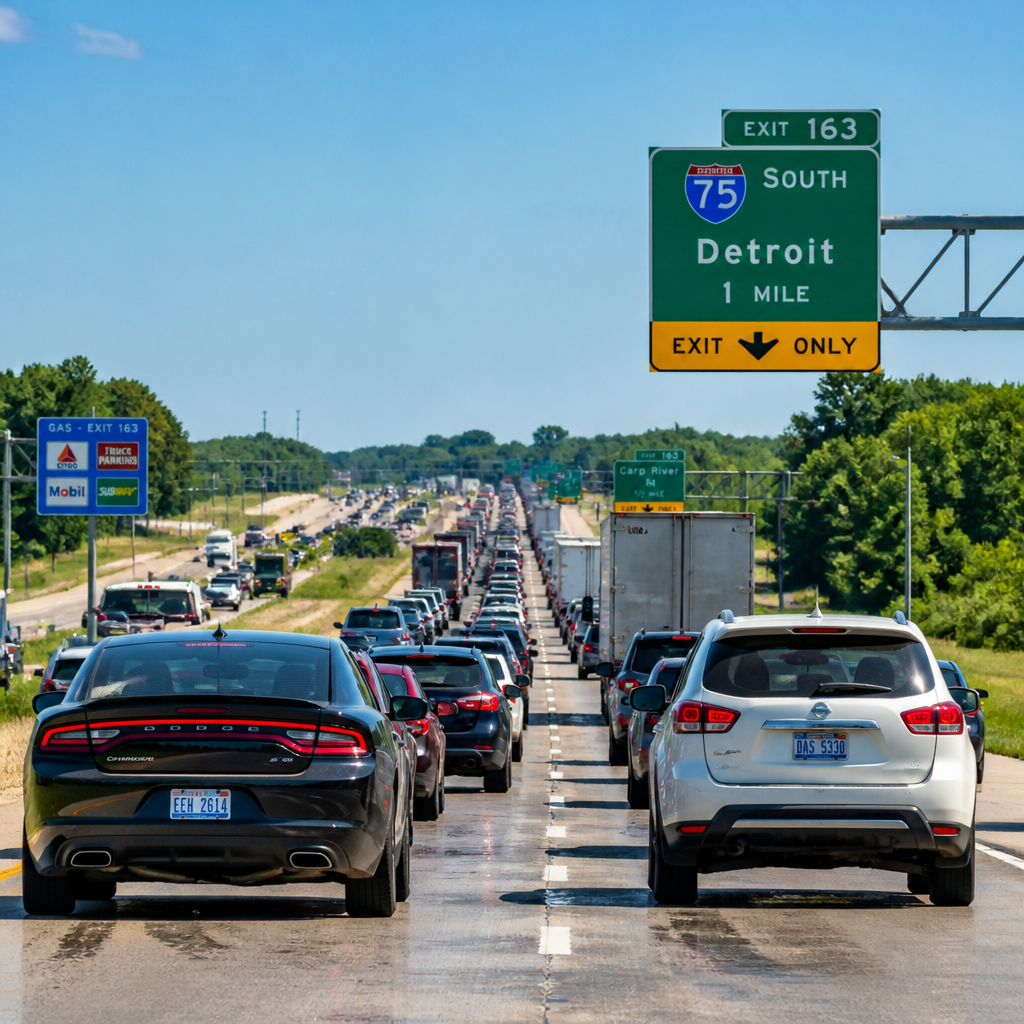
This one is genuinely dangerous because it does not always produce an audible warning. You simply notice that you have to start braking earlier than you used to. Maybe you are getting uncomfortably close to the car ahead at a stoplight, or you are pressing harder than usual to slow down at an exit ramp.
“Brake fade, whether caused by heat, worn pads, or contaminated fluid, can increase stopping distance by 20 to 50 percent before the driver notices a change in feel. By that point, the margin for safe emergency stops has shrunk dramatically.” — NHTSA Vehicle Safety Research
Increased stopping distance can result from worn pads with reduced friction material, glazed pads that have hardened from overheating, air in the brake lines, or brake fluid that has absorbed moisture and is close to its boiling point. Brake fluid should typically be replaced every two years or 24,000 miles, a maintenance step that most Metro Detroit drivers skip entirely.
If your vehicle feels like it needs more pedal pressure than it used to, or if emergency stops feel less confident than they did a year ago, those are not imaginary feelings. The system is degrading, and signs brakes need replacing do not get more honest than this one.
Sign 6: Brake Warning Light on Dashboard
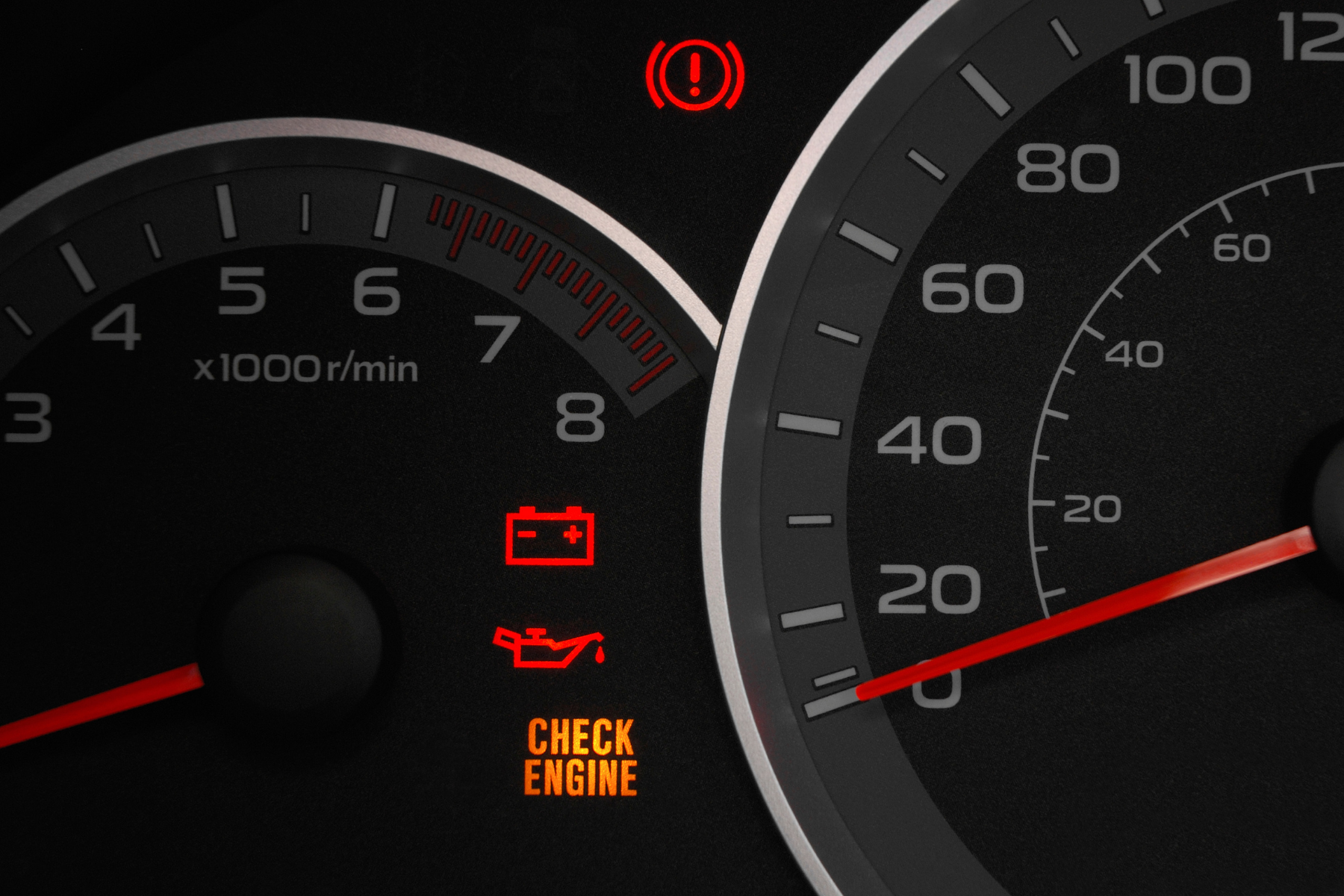
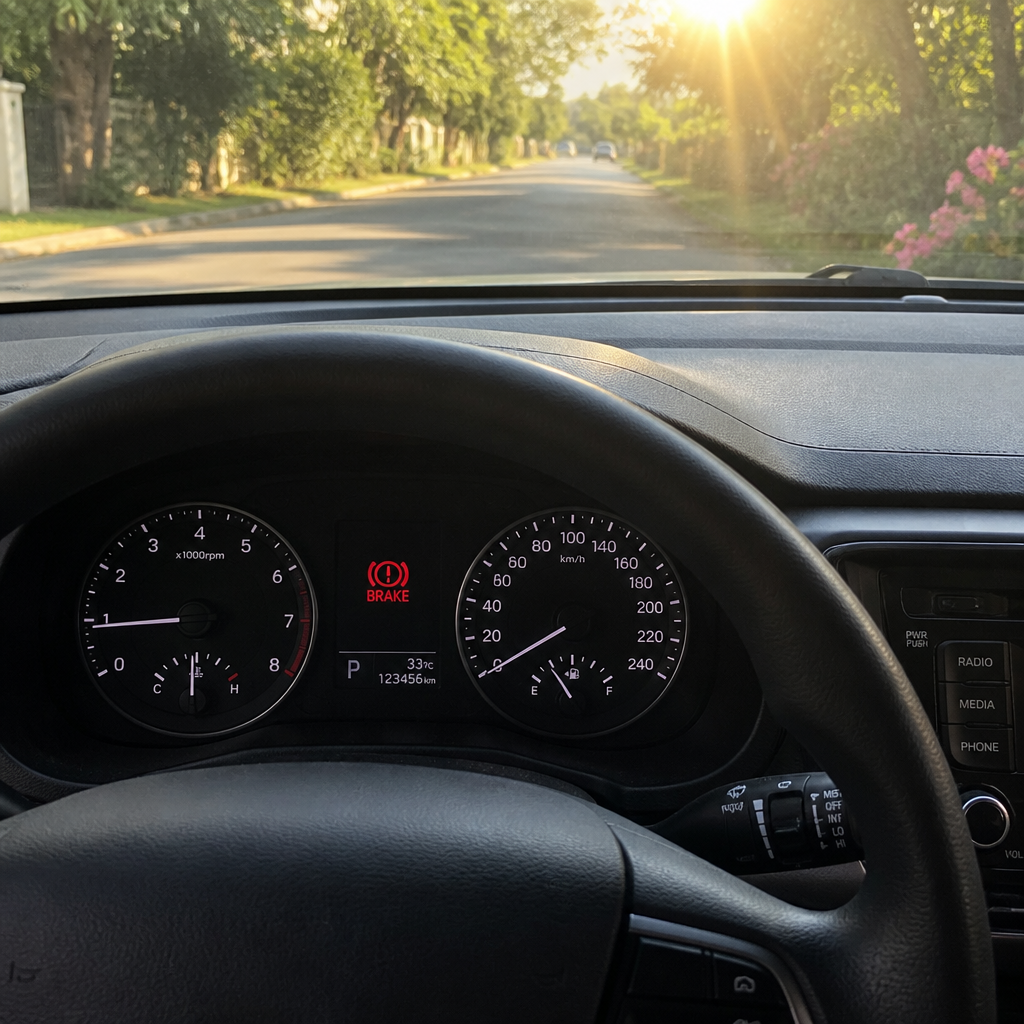
Modern vehicles have two brake-related warning lights. The red BRAKE light typically indicates a serious issue: low brake fluid, a pressure imbalance in the hydraulic system, or the parking brake being partially engaged. The amber ABS light indicates a fault in the anti-lock braking system. Neither light should be dismissed.
A common driver mistake is to check whether the parking brake is fully released when the red BRAKE light comes on, confirm it is released, and then assume the light is a glitch. If the parking brake is not the cause and the light stays on, the vehicle has a hydraulic issue that can result in partial or complete brake failure. This is not a drive-it-until-Friday situation.
Low brake fluid often indicates a leak somewhere in the system, not just normal consumption. Brake fluid does not burn off the way engine oil does. If your reservoir is low, fluid is going somewhere. A qualified technician can pressure-test the system and identify leaks in the master cylinder, calipers, wheel cylinders, or brake lines. Car Aid’s certified technicians in Southfield and across Metro Detroit perform this inspection as part of any brake diagnostic appointment.
Sign 7: Burning Smell After Highway Driving
A sharp, chemical burning smell after a drive on I-75 or I-96 is a red flag that brake components are overheating. This happens most often when a caliper is sticking and applying continuous friction to the rotor, or when a driver has been riding the brake pedal on a long downhill stretch.
What makes this particularly dangerous is brake fade. When brake fluid overheats past its boiling point, it vaporizes. Vapor compresses far more easily than liquid, which means pressing the brake pedal may produce very little actual braking force. This is called vapor lock, and it is one of the most sudden and terrifying brake failures a driver can experience.
Brake fluid has a rated dry boiling point and a wet boiling point. Fresh DOT 3 fluid boils at 401 degrees Fahrenheit dry, but moisture-contaminated fluid can boil as low as 284 degrees Fahrenheit, well within reach during aggressive summer driving. If your car smells like burning chemical or hot metal after a highway drive, pull over safely and let it cool. Then schedule a brake service appointment before driving again at highway speeds.
Brake Problem Severity: Quick Comparison
Not every brake symptom carries the same urgency. The table below breaks down the three most common brake conditions Metro Detroit drivers encounter, their severity level, and the typical repair scope.
| Brake Condition | Severity Level | Typical Repair Scope |
|---|---|---|
| Squealing pads with rotors still in spec | Moderate, address within 1-2 weeks | Pad replacement on affected axle, system inspection |
| Grinding with scored rotors | High, address within 1-3 days | Pad replacement plus rotor resurfacing or replacement, caliper inspection |
| Brake warning light on with low fluid or pulling while braking | Critical, do not delay | Full hydraulic system inspection, caliper and hose check, fluid flush, potential master cylinder replacement |
Why Summer Is Especially Hard on Metro Detroit Brakes
Metro Detroit’s summer driving patterns create a specific set of conditions that accelerate brake wear faster than average national data predicts. The combination of stop-and-go traffic on the Lodge Freeway, construction zones slowing traffic on M-59, and weekend highway trips up to Waterford or Shelby Township means brakes are working hard in high-heat conditions consistently.
High ambient temperatures reduce the buffer between normal operating heat and the threshold where brake components begin to degrade. Brake pads rated for normal use can approach their thermal limits on a 95-degree day after heavy city driving in ways they would not on a 65-degree spring day. The Michigan summer also brings sudden downpours that cause drivers to brake hard on wet pavement, which applies significant stress to the entire system.
The residual road salt from winter also matters more than most drivers realize. Salt that worked its way into brake components during January and February does not fully clear out by June. Corroded hardware, stuck slider pins, and partially seized calipers are common findings at summer brake inspections across Southfield and Troy. This is why Car Aid recommends a brake inspection every spring as a standard part of seasonal vehicle maintenance, not just when symptoms appear.
Pro tip: If your vehicle sat in a driveway for more than two weeks during summer vacation, have the brakes inspected before driving at highway speeds. Surface rust that accumulates on rotors during extended sitting can cause uneven braking behavior and accelerated pad wear during the first several stops.
Frequently Asked Questions
How often should brakes be inspected in Metro Detroit?
For most vehicles driven regularly in Metro Detroit, a brake inspection at every oil change interval is reasonable. Given Michigan’s road salt, temperature swings, and highway traffic patterns, once per year is the minimum. If you drive more than 15,000 miles annually or regularly use highways like I-75 or I-96 for commuting, twice-yearly inspections are the smarter standard.
What is the average cost of brake service in Southfield MI?
A standard brake pad replacement on a single axle typically runs between $150 and $300 at a full-service shop, depending on vehicle type and pad quality. If rotors need resurfacing, add $80 to $120 per rotor. Full rotor replacement adds $150 to $300 per rotor. A complete front and rear brake job with new pads and rotors on a family SUV often runs $600 to $900. Getting it done at the squeal stage rather than the grinding stage saves a significant amount of money.
Can I drive with a brake warning light on?
Only long enough to get to a repair facility safely. A illuminated red BRAKE warning light indicates a potential hydraulic system issue. Driving on a compromised hydraulic system risks partial or complete brake failure. Do not assume the light is a sensor error. Have the system inspected before resuming normal driving. The ABS light is slightly less urgent but still requires diagnosis within a few days.
How do I know if I need new rotors or just new brake pads?
Pads alone are indicated when rotors measure within manufacturer thickness specifications, show no significant scoring or grooves, and have a smooth surface. Rotors need replacement or resurfacing when they measure below minimum thickness, show deep grooves from metal-on-metal contact, or have significant heat cracking or warping. A technician measures rotor thickness with a micrometer during inspection. This is not something you can accurately assess visually from outside the wheel.
Is brake fluid replacement really necessary every two years?
Yes, and this is one of the most skipped maintenance items across the board. Brake fluid is hygroscopic, meaning it absorbs moisture from the atmosphere over time. As moisture content increases, the boiling point drops. Old, moisture-saturated fluid in a Metro Detroit summer can boil during heavy traffic stops, creating vapor lock. Flushing and replacing brake fluid every two years or 24,000 miles is an inexpensive service that protects the entire hydraulic system.
What is the difference between brake fade and total brake failure?
Brake fade is a temporary loss of braking effectiveness caused by overheated pads or fluid. The pedal feels spongy or requires harder pressure than normal. Stopping distances increase noticeably. Fade can recover once components cool, but it is a warning that the system is being pushed beyond its limits. Total brake failure is a complete loss of hydraulic pressure, where pressing the pedal produces no meaningful stopping force. Total failure is rare but is directly linked to ignored fade symptoms and deferred maintenance.
If you have noticed any of these warning signs on your vehicle this summer, share what you experienced in the comments or contact the Car Aid team at your nearest Metro Detroit location. Your specific situation may help another driver recognize the same problem before it becomes an emergency.
We would love your feedback and any insights you would share with others. What perspective would you add?
References
- National Highway Traffic Safety Administration official resource for vehicle brake safety standards and crash statistics
- Statista automotive industry data on vehicle maintenance costs and brake service frequency in the United States
- Forbes coverage of automotive maintenance costs and consumer vehicle safety spending trends
- U.S. Department of Transportation research on braking systems, stopping distances, and vehicle safety requirements
- Consumer Reports independent testing data on brake performance, pad longevity, and vehicle safety ratings