Metro Detroit summers are rough on vehicles. Between stop-and-go traffic on I-75, heat-soaked parking lots in Southfield, and long weekend drives up to Shelby Township, your car takes a beating from June through August. The problem is that most drivers ignore the early warning signs until they’re stranded on the shoulder of M-59. If you’re searching for auto repair in Shelby MI or anywhere across Metro Detroit, this guide will tell you exactly what to watch for, why it matters, and when to stop waiting.
Table of Contents
- Quick Takeaways
- Sign 1: Your Brakes Feel Different
- Sign 2: Your AC Is Blowing Warm Air
- Sign 3: You Are Overdue for an Oil Change
- Sign 4: The Check Engine Light Is On
- Sign 5: Your Tires Look Off
- Sign 6: Your Battery Is Struggling
- Sign 7: Steering Pulls or the Wheel Vibrates
- How Different Warning Signs Compare
- Frequently Asked Questions
- References
Quick Takeaways
| Key Insight | Explanation |
|---|---|
| Brake fade is a summer-specific risk | High ambient temperatures accelerate brake fluid boiling, increasing stopping distance on Michigan highways. |
| AC refrigerant leaks worsen in heat | Warm air from your vents in a Michigan August is almost always a refrigerant or compressor issue, not a filter problem. |
| Oil degrades faster above 90 degrees F | If you are past your oil change interval and summer heat has arrived, engine wear accelerates rapidly. |
| Diagnostic scans catch problems early | A check engine light with no other symptoms still carries real fault codes. Auto diagnostics in Troy MI can identify them in under an hour. |
| Tire pressure drops 1 PSI per 10-degree temperature swing | Underinflated tires are a blowout risk on hot Michigan pavement, especially on highway runs to Utica or Rochester. |
| Car batteries fail most in summer, not winter | Heat damages battery cells. A battery that barely started your car in July will likely die in October. |
| Alignment issues compound tire wear | A car pulling to one side means uneven tire wear and increased fuel consumption. A wheel alignment catches this before you replace tires prematurely. |
Sign 1: Your Brakes Feel Different
If your brake pedal feels soft, spongy, or sinks closer to the floor than normal, that is not a quirk. That is a warning. In practice, a soft pedal almost always points to air in the brake lines or degraded brake fluid. Both of these conditions are made worse by summer heat.
A common mistake is assuming that squealing means the brakes are fine because the car still stops. Squealing is actually the wear indicator making contact with your rotor. It means you have days, not months, before metal-on-metal damage begins. At that point you are not just replacing pads, you are replacing rotors too.
According to the National Highway Traffic Safety Administration, brake-related issues account for roughly 22 percent of all vehicle crashes caused by mechanical failure. That number is not abstract. It means a brake inspection in Metro Detroit before summer ends is not optional maintenance. It is a safety decision.
What a Proper Brake Inspection Covers
A full brake inspection at Car Aid checks pad thickness, rotor surface condition, brake fluid moisture content, caliper function, and brake line integrity. Many shops only visually check the pads. That is not enough.
If you are hearing grinding when you stop, especially after long highway drives between Southfield and Troy, get it checked the same day. Grinding means the pad is gone.
Pro tip: If your car pulls to one side when you brake, that is almost always a stuck caliper or uneven pad wear. This is a specific diagnosis, not a vague issue, and it can be confirmed and fixed in a single appointment at Car Aid’s Shelby or Troy location.
Sign 2: Your AC Is Blowing Warm Air
Michigan summers regularly hit the mid-90s. If your AC starts blowing lukewarm air, you are not dealing with a comfort issue. You are dealing with a system that has either lost refrigerant, has a failing compressor, or has a blocked condenser. All three of these cause real mechanical damage if ignored.
The data consistently shows that refrigerant leaks are the most common cause of AC failure in vehicles over five years old. A low refrigerant charge causes the compressor to work harder than it was designed to, shortening its lifespan from years to months. Replacing a compressor costs three to five times more than recharging refrigerant and fixing the leak early.
AC Service in Michigan: What to Expect
Proper AC service in Michigan is not just a refrigerant top-off. It includes a pressure test to find leaks, inspection of the condenser and evaporator coils, and a check of the blower motor. Car Aid’s certified technicians run this full diagnostic before any refrigerant is added, so you are not paying for a temporary fix.
A common mistake is going to a quick-lube shop for AC service. They typically add refrigerant without checking for leaks. Six weeks later you are back in the same situation, having paid twice.
“Deferred maintenance on vehicle AC systems is one of the top reasons compressors fail prematurely. A leak that costs $150 to fix becomes a $900 compressor replacement if left unaddressed through a full summer.” – Car Care Council, Vehicle Maintenance Advisory
Sign 3: You Are Overdue for an Oil Change
If your oil life monitor is below 15 percent or your last oil change in Southfield was more than 5,000 miles ago on conventional oil, summer heat is actively accelerating engine wear right now. Hot Michigan summer traffic, especially idling in construction zones on I-696, is one of the hardest conditions for engine oil.
The function of engine oil is to create a film between metal surfaces. When oil breaks down from heat and age, that film thins. Metal contacts metal. The wear is cumulative and permanent. No oil change after the fact reverses existing wear. The only thing that prevents it is staying current on intervals.
Conventional vs. Synthetic Oil in Summer Heat
In practice, synthetic oil handles Metro Detroit summer heat significantly better than conventional oil. It maintains viscosity at higher temperatures, which means better engine protection during stop-and-go traffic. The cost difference per change is real but minor compared to the cost of premature engine damage.
If you drive a newer vehicle or tow anything regularly, synthetic oil is not a luxury. It is the correct specification for your engine under those conditions.
Pro tip: Do not wait for the oil light to come on. By the time that light activates, oil pressure has already dropped to a critical level. Use your oil life percentage display or a simple calendar reminder set to your mileage interval instead.
Sign 4: The Check Engine Light Is On
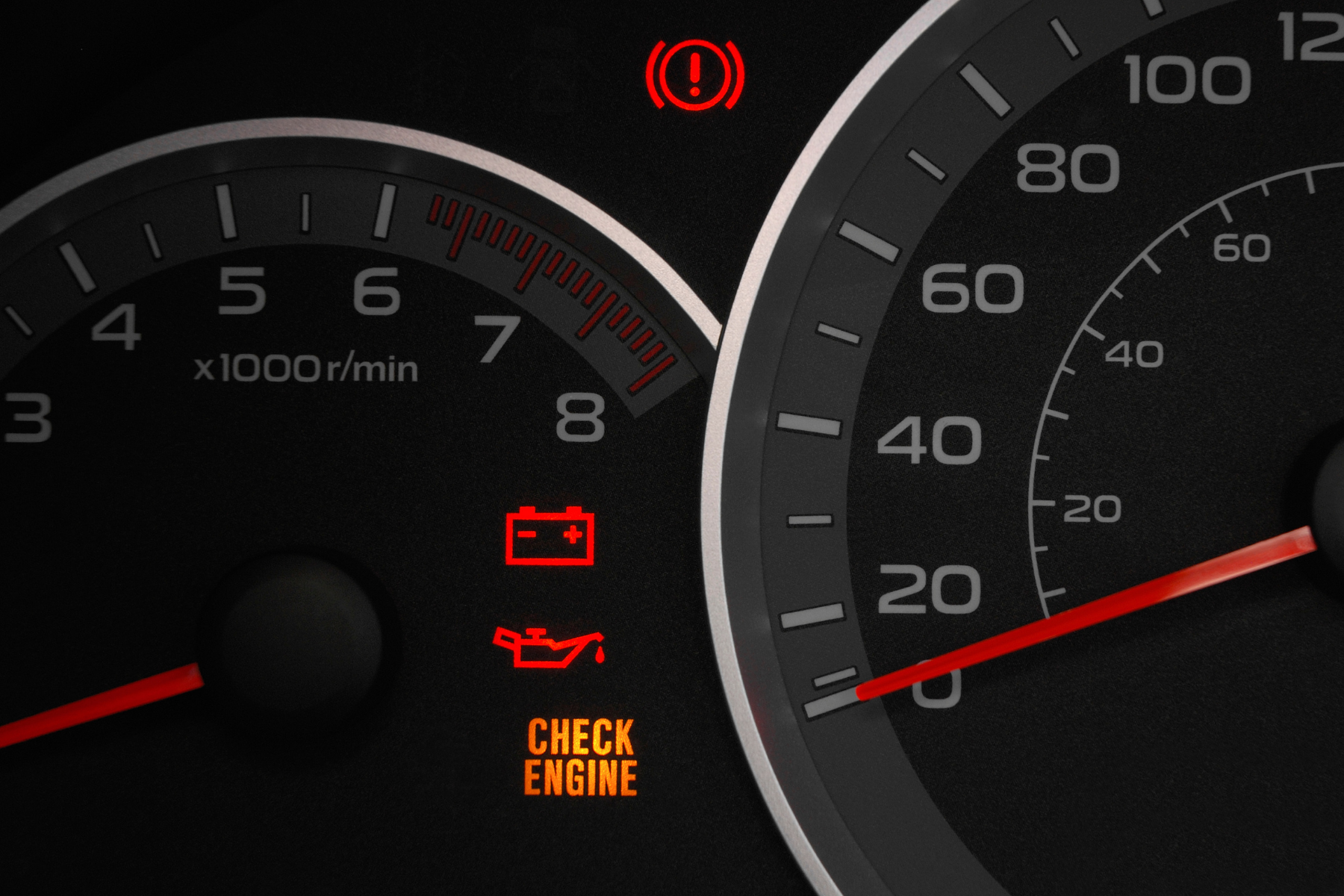
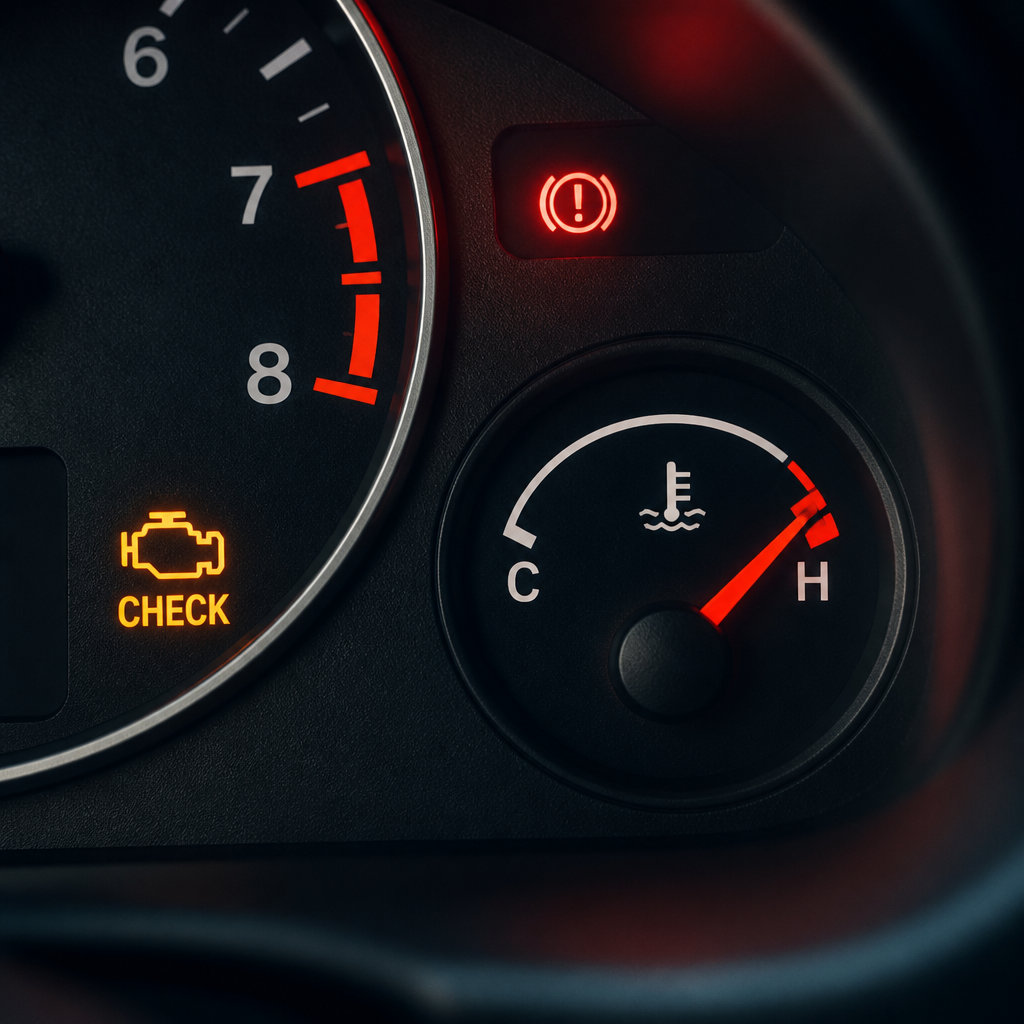
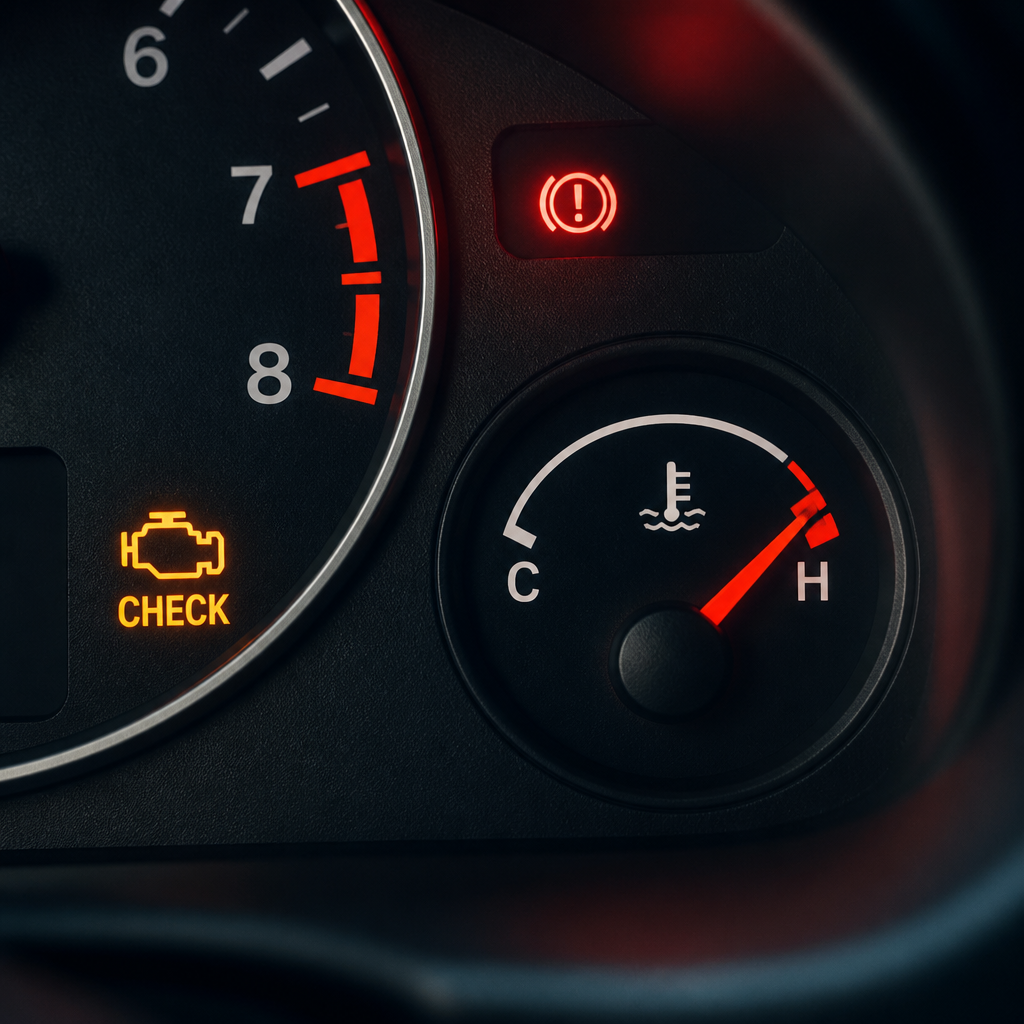
A check engine light that has been on for two weeks is not “probably nothing.” It is a stored fault code in your vehicle’s ECU that a diagnostic scanner can read in minutes. Guessing what it means without scanning is a waste of time and money.
Car Aid offers auto diagnostics in Troy MI and across all Metro Detroit locations. The process is straightforward. A technician connects an OBD-II scanner, pulls the fault codes, and interprets them in context with a physical inspection. The scan itself takes less than 30 minutes. What it reveals can range from a loose gas cap to a misfiring cylinder to an oxygen sensor failure.
Why Summer Makes This More Urgent
Heat affects sensor accuracy. An oxygen sensor that is borderline functional in spring will fail completely in August heat, causing the engine to run rich, burning more fuel, and potentially damaging the catalytic converter. A catalytic converter replacement runs between $900 and $2,500 depending on the vehicle. An oxygen sensor is a fraction of that cost.
The data consistently shows that check engine lights related to emissions and sensor failures spike during summer months in northern states. This is not coincidence. It is thermal stress on aging components.
Sign 5: Your Tires Look Off
Tires that look slightly flat, show uneven wear patterns, or have visible cracking in the sidewalls are a serious summer hazard. Hot pavement raises internal tire temperature. An already underinflated tire on hot asphalt is operating under compounded stress that can lead to a blowout at highway speed.
The standard guidance from the NHTSA is to check tire pressure monthly and before any road trip. For every 10-degree drop in ambient temperature, tires lose approximately 1 PSI. The inverse is also true. Summer heat can cause overinflation. Both conditions accelerate uneven wear and reduce handling performance.
Tire Rotation and Why It Matters Before Fall
Uneven wear between front and rear tires is extremely common on front-wheel-drive vehicles, which make up the majority of family cars in Metro Detroit. A tire rotation every 5,000 to 7,500 miles evens out that wear pattern and extends the life of all four tires significantly.
A common mistake is skipping rotation because the tires still look okay. By the time wear is visually obvious, you have already lost thousands of miles of tire life. Car Aid technicians check tread depth at every rotation and flag tires approaching the 2/32-inch replacement threshold before they become a safety issue.
Sign 6: Your Battery Is Struggling
Most Metro Detroit drivers assume battery failure is a winter problem. The real data tells a different story. Heat is the primary cause of battery failure, not cold. High temperatures accelerate internal corrosion and cause battery fluid to evaporate, degrading the plates inside the battery. According to AAA, extreme heat can reduce a battery’s effective lifespan by up to 33 percent compared to moderate-temperature environments.
Signs of a struggling battery include slow engine cranking on startup, dimming headlights at idle, and electronics that behave erratically. If your battery is over three years old and you are noticing any of these signs this summer, it needs to be tested before fall arrives.
Battery Testing vs. Replacement
A battery test takes under five minutes and gives a clear pass or fail result. Car Aid performs battery load tests at all locations including Waterford and Utica. If the battery tests weak but has not failed yet, you can plan the replacement on your schedule rather than being stranded at a Meijer parking lot at 9 PM.
Proactive replacement of a failing battery costs roughly $100 to $200. An emergency jump-start service and tow plus battery replacement on a Sunday night costs significantly more in both money and time.
Sign 7: Steering Pulls or the Wheel Vibrates
If your steering wheel pulls consistently to the left or right when you let go on a straight road, your alignment is off. If the wheel vibrates at highway speeds above 60 mph, you likely have a tire balance issue or, less commonly, a worn suspension component.
Both of these problems worsen over time and compound each other. Misalignment causes uneven tire wear. Uneven tire wear worsens the vibration. The cycle ends with you replacing tires that should have lasted another 20,000 miles and possibly dealing with worn ball joints or tie rod ends that alignment alone cannot fix.
Wheel Alignment and Its Real Cost Savings
A wheel alignment at Car Aid costs between $75 and $100 depending on the vehicle. A set of four tires for a family SUV in Metro Detroit runs $600 to $1,200. The math on catching alignment issues early is not complicated.
In practice, alignment shifts most commonly after hitting a significant pothole. Michigan roads, especially after last winter’s freeze-thaw cycles, are loaded with pothole damage. If you hit a hard pothole in the last three months and have not had alignment checked since, that is worth a quick inspection before summer ends.
How Different Warning Signs Compare
Not all warning signs carry the same urgency or the same cost if ignored. The table below puts the seven signs into practical context for Metro Detroit drivers deciding what to prioritize first.
| Warning Sign | Risk Level If Ignored | Typical Repair Cost (Early vs. Late) |
|---|---|---|
| Brake pedal feels soft or car pulls when braking | High: direct safety risk, accident potential | $150 to $300 early vs. $500 to $900 with rotor damage |
| AC blowing warm air | Medium-High: compressor damage if refrigerant runs out | $150 to $250 refrigerant service vs. $900 to $1,500 compressor replacement |
| Overdue oil change | High: permanent engine wear over time | $60 to $100 oil change vs. $3,000 to $8,000 engine repair |
| Check engine light on | Medium to High: depends on fault code | $80 to $200 sensor fix vs. $900 to $2,500 catalytic converter |
| Underinflated or worn tires | High: blowout risk at highway speed | $20 to $50 rotation vs. $600 to $1,200 full set replacement |
| Slow engine crank or dim lights | Medium: stranding risk increases sharply in fall | $100 to $200 proactive replacement vs. $200 to $400 emergency service |
| Steering pull or wheel vibration | Medium: accelerated tire and suspension wear | $75 to $100 alignment vs. $600 to $1,200 early tire replacement |
Frequently Asked Questions
How do I know if my car needs a brake inspection before fall in Metro Detroit?
The most reliable indicators are a soft or spongy brake pedal, squealing or grinding sounds when stopping, the car pulling to one side under braking, or a brake warning light on the dashboard. Any one of these symptoms warrants a same-week inspection. Car Aid offers brake inspections at all Metro Detroit locations including Southfield, Troy, and Shelby MI.
Is auto repair in Shelby MI different from what I need in Troy or Southfield?
The services are identical across Car Aid locations. What differs is drive time for you. Car Aid operates in Southfield, Troy, Shelby, Utica, Waterford, and Rochester so that Metro Detroit drivers do not have to cross town for reliable service. Each location has certified technicians handling the full range of maintenance and repairs.
What does a full summer car check-up include?
A comprehensive pre-fall inspection covers brake pad and fluid condition, tire pressure and tread depth, oil level and quality, AC system pressure and refrigerant charge, battery load test, alignment check, and a full diagnostic scan for active or pending fault codes. Car Aid technicians complete this inspection as a single visit.
Can I keep driving with a check engine light on?
It depends on whether the light is steady or flashing. A steady check engine light means a non-critical fault that should be diagnosed within a week. A flashing check engine light means an active misfire that is damaging the catalytic converter right now. Pull over safely and call for service immediately if the light is flashing.
How often should I get an oil change during Michigan summers?
For conventional oil, every 3,000 to 5,000 miles. For full synthetic, every 7,500 to 10,000 miles depending on your vehicle manufacturer’s specification. If you drive in heavy stop-and-go traffic in Metro Detroit regularly, err toward the shorter end of those intervals. Heat and short trips are harder on oil than highway miles.
Why is summer harder on car batteries than winter in Michigan?
Heat accelerates chemical reactions inside the battery, which speeds up internal corrosion and causes battery fluid to evaporate. Cold weather reveals batteries that heat has already weakened. The failure happened in summer. It just shows up when you try to start your car on a cold October morning. Getting a load test done before summer ends catches this before it becomes an emergency.
If you have noticed any of these warning signs in your own vehicle this summer, share what you found in the comments below and let us know how it was resolved.
We would love your feedback and any insights you would share with others. What perspective would you add?
References
- National Highway Traffic Safety Administration: vehicle safety data and brake failure statistics for U.S. drivers
- Car Care Council: seasonal vehicle maintenance recommendations and cost-of-repair guidance
- AAA: battery failure research, summer heat effects on vehicle components, and roadside assistance data
- Statista: automotive maintenance trends and consumer spending data on vehicle repair in the United States
- Consumer Reports: vehicle reliability ratings and maintenance frequency guidance for American car owners