Most Metro Detroit drivers know they need both tire rotations and wheel alignments, but very few could tell you the difference in plain terms. That confusion is expensive. Skipping a rotation shortens your tire life. Ignoring an alignment after hitting one of Michigan’s notorious potholes can quietly destroy a new set of tires before you’ve put 10,000 miles on them. If you’re searching for reliable tire rotation in Michigan, you need to understand exactly what each service does, how often you need it, and why the two work together rather than substituting for each other. This guide gives you clear, practical answers built around the roads and conditions Metro Detroit drivers actually face.
Table of Contents
- Quick Takeaways
- What Is Tire Rotation and What Does It Actually Do
- What Is Wheel Alignment and Why Michigan Roads Make It Urgent
- Wheel Alignment vs Tire Rotation: Key Differences Side by Side
- Do You Need Both Services or Just One
- Warning Signs You Should Not Ignore
- Frequently Asked Questions
- References
Quick Takeaways
| Key Insight | Explanation |
|---|---|
| Tire rotation moves tires to new positions | Front tires swap to the rear and vice versa to spread tread wear evenly across all four tires. |
| Wheel alignment adjusts suspension angles | It corrects how your wheels contact the road so the car tracks straight and does not pull left or right. |
| These are two completely separate services | One does not replace the other. Rotating tires does not fix a misalignment, and aligning wheels does not even out uneven wear. |
| Michigan potholes knock alignment out fast | A single significant pothole impact can immediately throw your alignment off, which is why Metro Detroit drivers need alignment checks more often than drivers in smoother-road states. |
| Rotation interval is roughly every 5,000 to 7,500 miles | Check your owner’s manual, but for most vehicles driven in Michigan conditions, sticking to this range prevents premature wear. |
| Alignment check is recommended at least once per year in normal conditions | For drivers on rough Michigan roads daily, every six months or after any significant road impact is smarter. |
| You can schedule both services together | Combining them in one visit saves time and ensures that newly rotated tires start their new positions with correct angles. |
What Is Tire Rotation and What Does It Actually Do
A tire rotation is straightforward in concept: a technician removes all four tires and remounts them in different positions on the vehicle. Front tires move to the rear, rear tires move to the front, and depending on whether your vehicle is front-wheel drive, rear-wheel drive, or all-wheel drive, tires may also switch sides.
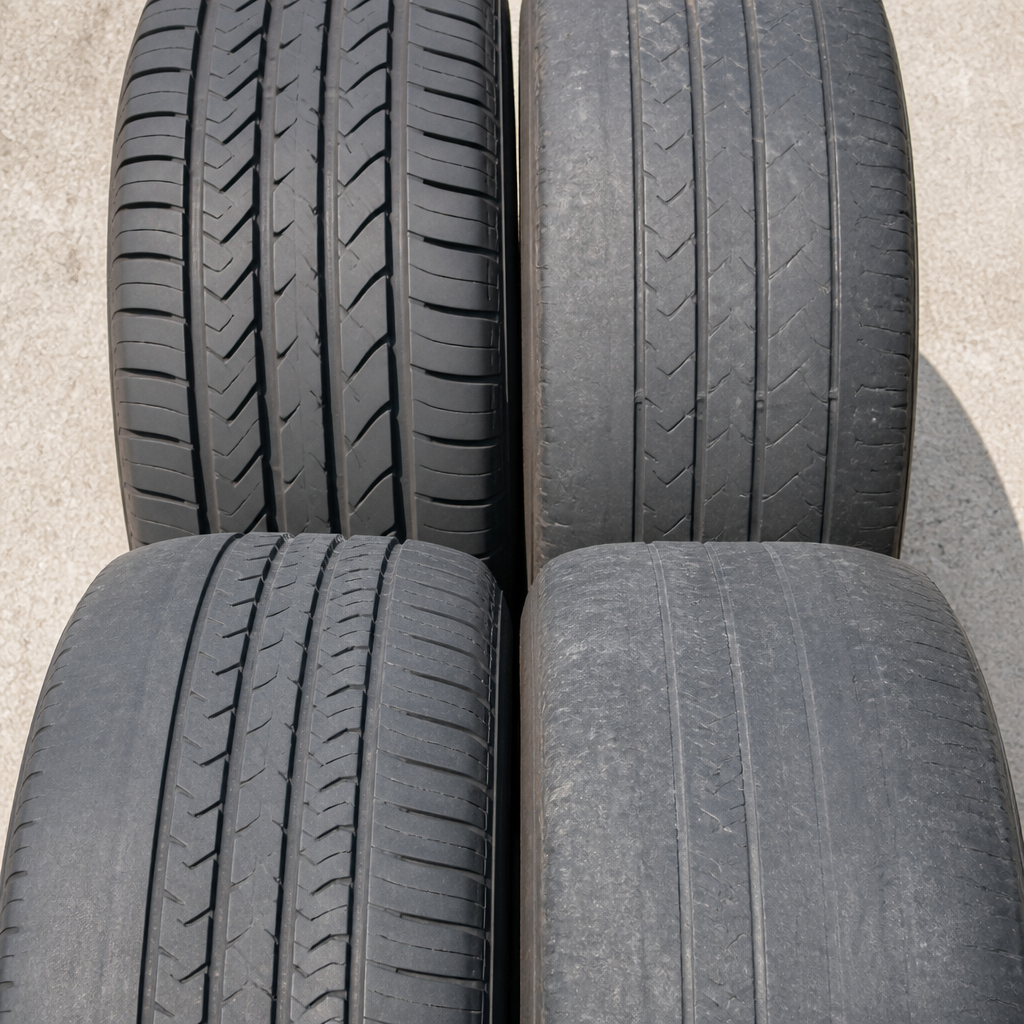
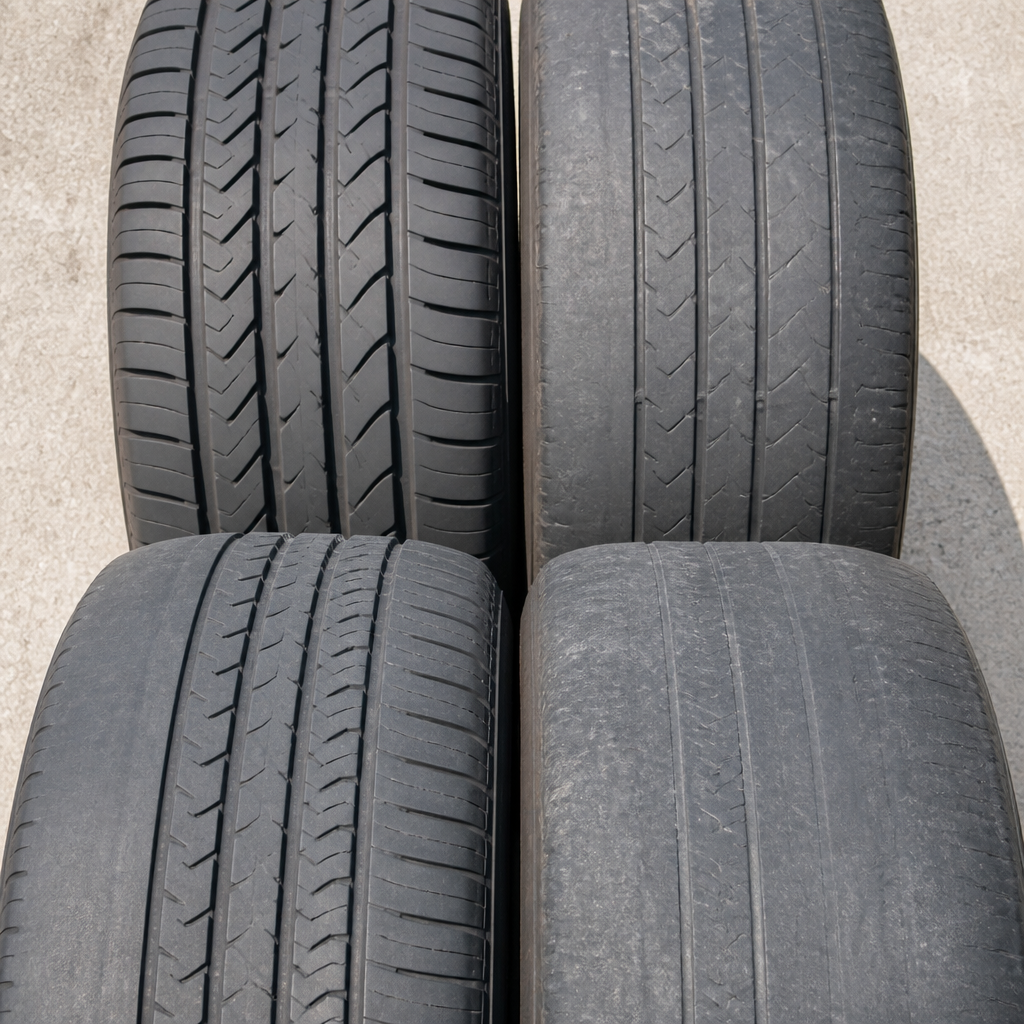
The reason this matters is physics. Front tires on a front-wheel-drive vehicle, which is most cars on Michigan roads today, carry the engine load, handle steering, and transmit power to the pavement all at once. They wear down significantly faster than rear tires that are just rolling along. Without rotation, your front tires could be close to the wear limit while your rear tires still have plenty of tread left, forcing you to replace just two tires sooner than you should have to.
Rotating your tires evens out that wear across all four, which extends the life of the full set and helps maintain consistent handling. It also improves fuel efficiency by reducing uneven rolling resistance.
How Often Should You Rotate Tires in Michigan
The general recommendation is every 5,000 to 7,500 miles. Many drivers in Metro Detroit time rotations with every other oil change, which is a practical habit that keeps the interval consistent without requiring a separate appointment. If you drive a lot of highway miles between Southfield and Troy or make frequent stop-and-go trips through Utica and Waterford, the lower end of that range applies more to your situation.
Tires that are over-inflated or under-inflated also wear unevenly, so checking your tire pressure at each rotation is not optional. It is part of the same job.
Pro tip: If you have a full-size spare tire that matches your other four tires, ask about a five-tire rotation pattern. This can extend the life of all five tires and reduce per-tire cost over the long run.

What Is Wheel Alignment and Why Michigan Roads Make It Urgent
Wheel alignment is an adjustment to your vehicle’s steering and suspension system, not the tires themselves. A technician uses precision equipment to measure and correct the angles at which your wheels contact the road. The three main angles involved are toe (whether the front of the tires points inward or outward), camber (whether the tire tilts inward or outward when viewed from the front), and caster (the angle of the steering axis viewed from the side).
When those angles are correct, your car drives straight when you hold the steering wheel steady and your tires make full, flat contact with the road surface. When they drift out of spec, your tires drag or tilt rather than roll cleanly, which creates rapid and often lopsided wear patterns.
Why Metro Detroit Drivers Need Alignment Checks More Often Than Most
Michigan’s freeze-thaw cycle is brutal on roads. Water seeps into pavement cracks, freezes, expands, and blows out chunks of asphalt. The result is some of the worst pothole conditions in the country, concentrated across the Metro Detroit region every spring and frequently present in winter under snow and slush. Hitting even a moderately sized pothole can immediately throw your alignment off.
Michigan roads create the perfect storm for alignment issues. The freeze-thaw cycles produce severe potholes, and winter driving over snow banks and ice ridges puts extra stress on suspension components that hold your alignment in place.
Beyond potholes, Metro Detroit’s constant road construction creates uneven surfaces and temporary lane shifts that repeatedly stress the same suspension components. Drivers in Shelby, Rochester, and surrounding areas dealing with these conditions should not wait for obvious symptoms to get an alignment check. At minimum, once a year is the baseline. If you drive daily on rougher routes, every six months is more appropriate.
Pro tip: After any suspension or steering repair, always request an alignment check as part of the same service visit. New parts installed without alignment correction will wear unevenly almost immediately.
Wheel Alignment vs Tire Rotation: Key Differences Side by Side
The simplest way to keep these straight: tire rotation is about where your tires sit on the car, while alignment is about the angle at which your wheels meet the road. They address different problems and neither one substitutes for the other.
A common mistake is assuming that because both services involve tires and both affect wear patterns, doing one covers the need for the other. It does not. You can have perfectly rotated tires and a badly misaligned suspension, and the misalignment will destroy that fresh tire arrangement in a fraction of the normal lifespan.
| Feature | Tire Rotation | Wheel Alignment |
|---|---|---|
| What it does | Moves tires to different positions on the vehicle | Adjusts suspension angles so wheels track correctly |
| What it fixes | Uneven wear caused by position-related stress differences | Pulling, drifting, and wear caused by incorrect wheel angles |
| Typical service interval | Every 5,000 to 7,500 miles | Once per year minimum; every 6 months on rough Michigan roads |
| Triggered by specific events | Mileage-based; consistent schedule | Pothole impacts, curb strikes, suspension work, and mileage |
| Affects fuel economy | Yes, by reducing uneven rolling resistance | Yes, by ensuring tires roll straight with minimal drag |
| Can they be done together | Yes, and it is often more efficient to combine both in one service appointment | |
Do You Need Both Services or Just One
The short answer is yes, you need both, but not necessarily at the same time every visit. These are independent services that serve different functions. Keeping up with both protects your tires from unnecessary wear and reduces the likelihood of any single problem spiraling into a bigger repair bill.

In practice, many shops including Car Aid recommend combining a tire rotation with an alignment check during the same visit when the mileage intervals line up. It saves labor time and it makes sense logistically. When a technician rotates your tires, they already have the wheels off, which makes it straightforward to run an alignment inspection at the same time.
When to Get Both Done Together
Schedule both services together when you have reached your rotation mileage interval and one or more of the following is also true: you recently hit a significant pothole, you have not had an alignment check in over a year, or you notice any pulling or steering drift. The combination ensures that freshly repositioned tires start their new position at the correct angles, rather than immediately working against a misaligned suspension.
When to Get Alignment Alone
Get an alignment check immediately after any hard impact, including a pothole strike, hitting a curb, or any incident involving suspension or steering components. Do not wait until your next rotation interval. The damage happens in real time, and every mile driven on a fresh misalignment is erasing tread you already paid for.
Warning Signs You Should Not Ignore
Both services have distinct warning signs. Learning to read them saves money and prevents the kind of accelerated wear that sends drivers shopping for four new tires when they expected two more years from a set.
Signs You Need a Tire Rotation
The most obvious sign is visible tread depth differences between your front and rear tires. If your front tires look noticeably more worn than the rears, you are overdue. You might also notice the vehicle handling less predictably or a slight increase in road noise, since tires with uneven wear patterns vibrate differently at highway speeds.
Signs You Need a Wheel Alignment
Your car pulls to one side when you hold the steering wheel straight. The steering wheel itself sits off-center while driving straight ahead. You see wear concentrated heavily on the inside or outside edge of a tire rather than across the full tread width. Your tires show a feathered or saw-tooth tread pattern. Any of these symptoms means alignment, not rotation, is the fix needed. Many Metro Detroit drivers mistakenly accept these symptoms as normal after a rough winter, but they are not normal, and ignoring them leads to premature tire replacement and reduced vehicle safety.
At Car Aid locations across Southfield, Troy, Shelby, Utica, Waterford, and Rochester, certified technicians inspect both rotation condition and alignment angles during routine service visits. If something is off, you will know what it is and exactly why it matters, not just that a service is being recommended.
Frequently Asked Questions
Does tire rotation affect wheel alignment?
Not directly. Tire rotation and wheel alignment are independent services that do not interfere with each other. Rotating your tires does not change your suspension angles, and an alignment does not move tires between axle positions. However, they both contribute to even tire wear, so keeping up with both is more effective than doing just one.
How often should Michigan drivers get a wheel alignment?
At minimum once per year for normal driving conditions. For drivers who regularly navigate Metro Detroit’s potholed roads, a check every six months is more practical. You should also get an alignment check immediately after hitting a significant pothole, striking a curb, or having any suspension component repaired or replaced.
Can I skip tire rotation if my tires look fine?
Skipping rotation because tires look acceptable is one of the most common ways drivers shorten tire life without realizing it. Wear differences between axle positions develop gradually and are not always obvious by eye until significant damage has already occurred. Stick to the mileage interval in your owner’s manual, typically every 5,000 to 7,500 miles, regardless of how the tires look.
What is the difference between tire balancing and tire rotation?
Tire rotation moves each tire to a different position on the vehicle to even out tread wear across all four tires. Tire balancing corrects weight distribution around each individual wheel and tire assembly to eliminate vibrations, particularly at highway speeds. Both services are separate from wheel alignment. A complete tire service appointment may include all three depending on your vehicle’s condition.
Is it worth aligning all four wheels instead of just the front two?
For most modern vehicles, a four-wheel alignment is the more thorough choice. All-wheel drive vehicles and many front-wheel drive cars have adjustable rear suspension, meaning rear angles matter just as much as front angles. A two-wheel alignment on a vehicle that should have four-wheel service can leave rear misalignment uncorrected, which still produces uneven wear and handling problems.
Will an alignment fix my car pulling to one side?
In most cases, yes. Pulling to one side while driving straight is the most common symptom of misalignment. However, if the vehicle still pulls after a confirmed alignment, the problem may lie with uneven tire inflation or significant tread wear differences between tires. A technician who takes the time to verify tire pressure and tread depth alongside the alignment check will catch this combination of issues in one visit.
Have you dealt with alignment or rotation issues on Metro Detroit roads? Share your experience or questions in the comments and let us know what symptoms first tipped you off.
References
- Wheel alignment vs tire rotation explained: how to identify which service your vehicle needs
- Tire rotation vs wheel alignment: how these services work together and when to schedule each
- Wheel alignment guide for Michigan drivers: signs, intervals, and local road conditions
- How Michigan’s winter roads and freeze-thaw cycles drive alignment failures each season
- Tire rotation, balancing, and wheel alignment compared: what each service does for your vehicle