
If you drive anywhere in Metro Detroit, you already know the moment your front wheel drops into a pothole and your steering wheel jerks sideways. Most drivers shrug it off and keep moving. That is a mistake. Michigan roads rank among the most punishing in the country, and every freeze-thaw cycle that splits the pavement also quietly knocks your wheels out of spec. Ignoring wheel alignment in Rochester MI and across Metro Detroit is not just a comfort issue. It is a fast track to shredded tires, stressed suspension parts, and higher fuel bills. This guide explains exactly what wheel alignment does, why Michigan roads make it urgent, and what to expect when you bring your vehicle in for service.
Table of Contents
- Quick Takeaways
- What Wheel Alignment Actually Means
- Why Michigan Roads Are Uniquely Brutal on Alignment
- Warning Signs Your Alignment Is Off
- Alignment Angles Explained: Camber, Caster, and Toe
- Two-Wheel vs. Four-Wheel Alignment: Which Do You Need?
- How Often Should Metro Detroit Drivers Get an Alignment?
- What Happens During an Alignment Service at Car Aid
- Frequently Asked Questions
- References
Quick Takeaways
| Key Insight | Explanation |
|---|---|
| Michigan potholes knock wheels out of alignment instantly | A single hard pothole strike can shift camber, toe, and caster angles enough to cause measurable uneven tire wear within weeks. |
| Misalignment costs you money at the pump | When tires scrub instead of rolling freely, rolling resistance rises and fuel economy drops. Proper alignment reduces that waste. |
| Uneven tire wear is often the first visible clue | Feathering, one-sided edge wear, or rapid wear on a single tire almost always point to an alignment or suspension problem. |
| Alignment and tire balancing are two different services | Balancing corrects vibration from uneven wheel weight. Alignment corrects the angles at which your wheels contact the road. Neither replaces the other. |
| Most vehicles need alignment checked at least once a year | For Michigan drivers on rough roads, checking alignment every 12,000 miles or sooner is the practical minimum, not a upsell. |
| New tires deserve a fresh alignment | Mounting new tires on a misaligned vehicle wastes the tread you just paid for. Always align before or right after new tire installation. |
| Worn suspension parts prevent alignment from holding | Ball joints, tie rod ends, and control arm bushings must be in good condition. Aligning over worn parts is like straightening a picture on a wall that is already collapsing. |
What Wheel Alignment Actually Means
Wheel alignment is not about the wheels themselves. It is about the angles at which your tires make contact with the road surface. When a technician performs an alignment, they measure and adjust three specific angles, called camber, caster, and toe, and bring them back to the vehicle manufacturer’s specifications. Those specs exist for a reason. Engineers designed them to maximize tire contact patch, minimize rolling resistance, and keep your steering predictable under load.
A common misconception is that alignment is only necessary after a crash. In practice, alignment drifts gradually through normal driving and shifts abruptly every time a wheel absorbs a hard impact. Driving on Michigan roads accelerates both of those processes significantly.
The result of misalignment is not just a steering wheel that sits crooked. Misalignment puts constant sideways stress on tires that were engineered to roll straight. Over weeks and months, that stress destroys tread unevenly, forces your suspension to work against itself, and makes your engine work harder to maintain highway speed.

Why Michigan Roads Are Uniquely Brutal on Alignment
Michigan’s freeze-thaw cycle is the root cause of the state’s notorious road damage. Water seeps into pavement cracks, freezes, expands, and fractures the road surface from the inside. When temperatures warm, those fractured sections collapse into potholes. What makes Michigan particularly rough is that this cycle can repeat dozens of times in a single winter, progressively deepening and widening existing damage.
Road salt compounds the problem in a less obvious way. Salt accelerates corrosion on suspension components, including the tie rods, control arm bushings, and ball joints that must hold alignment angles in place. A suspension that is corroded or worn cannot maintain the angles set during an alignment service, no matter how precisely the technician performed the adjustment.
Proper alignment preserves handling, extends tire life, and keeps Michigan drivers safer on salted, potholed roads. When you suspect a problem, addressing it early avoids larger repairs and higher replacement costs.
For families driving in Southfield, Troy, Shelby Township, Utica, Waterford, and Rochester, this is not a theoretical risk. Any route that involves I-75, M-59, or Rochester Road exposes your vehicle to pothole strikes that can knock alignment angles out of specification in a single commute. Repair shops across Michigan report a surge in alignment and suspension work every spring, precisely because winter roads deliver that punishment season after season.
Road Salt and Suspension Corrosion
Michigan applies road salt from late November through early April in most years. Accumulated salt film on undercarriage components accelerates rust on the steel parts that suspension geometry depends on. When ball joints develop play, or when tie rod ends loosen from corrosion, the alignment angles drift even without any impact. This is why a vehicle can pass an alignment check in October and need another one by March, even without hitting a single pothole.
Pro tip: If your vehicle has not had an undercarriage inspection in the last two years, ask your technician to check ball joints, tie rod ends, and control arm bushings before your alignment service. Aligning over worn parts wastes both your time and your money.
Warning Signs Your Alignment Is Off
Some alignment problems announce themselves loudly. Others are quiet and expensive. Knowing both categories helps you catch the issue before it turns a routine alignment service into a full suspension repair.
Symptoms You Can Feel While Driving
The most obvious sign is a vehicle that pulls consistently to one side on a flat, level road without any steering input. A subtler sign is a steering wheel that sits off-center when you are driving straight. If your steering wheel is rotated five or ten degrees to the left or right while the car tracks straight, your toe angles are almost certainly out of spec.
Steering wheel vibration, especially at highway speeds, can indicate alignment problems, though it also overlaps with tire balancing issues. If the vibration began shortly after hitting a pothole, alignment is the more likely culprit. A loose or wandering steering feel, where the car seems to drift and requires constant correction, is another sign that caster or toe angles have shifted.
Symptoms You Can See on Your Tires
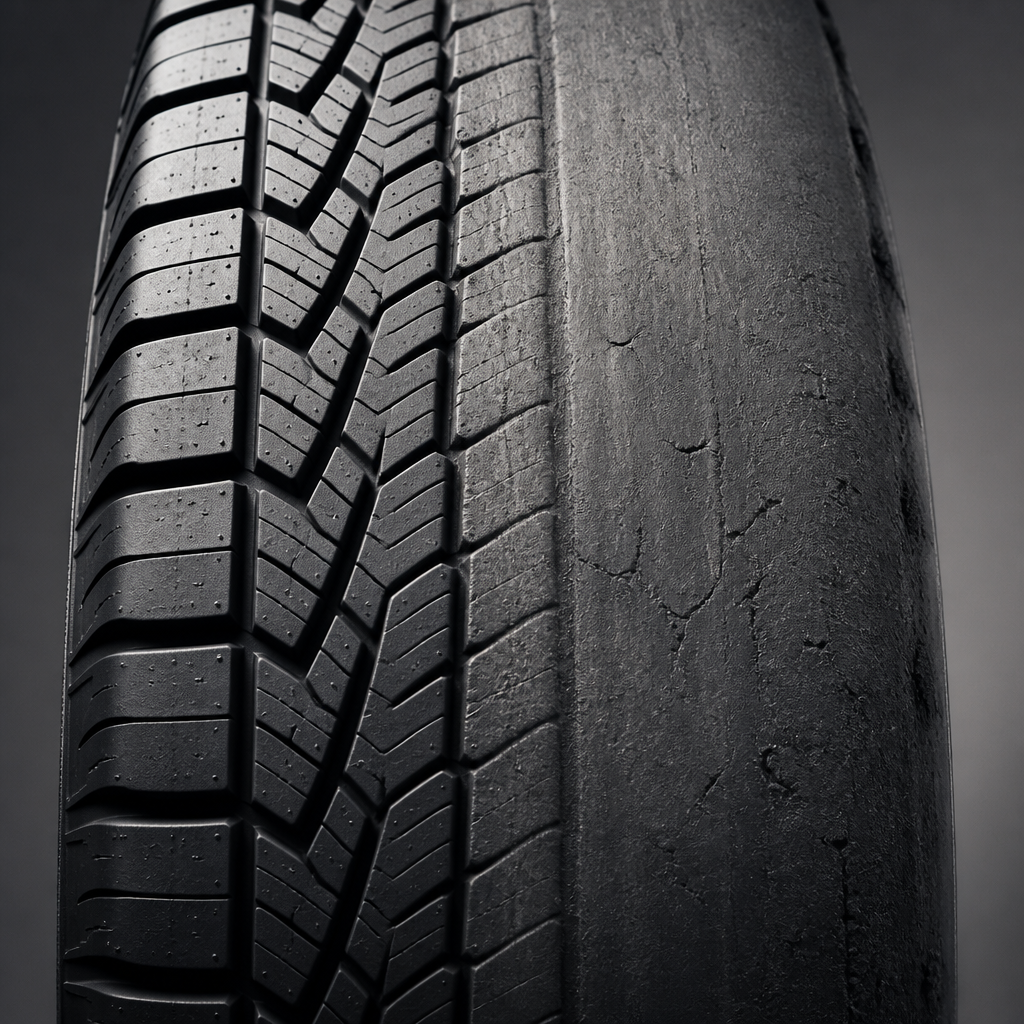
Uneven tire wear is the most diagnostic visual clue. Wear concentrated on the inside or outside edge of a tire indicates a camber problem. A feathering pattern, where the tread blocks look smooth on one side and sharp on the other, indicates a toe problem. Rapid wear across the full width of a single tire, while the other tires look fine, points to a combination of alignment and pressure issues. Any of these patterns mean your tires are scrubbing road surface they should be rolling over cleanly.
Pro tip: Check your tire tread with a flashlight at an angle, not straight on. The feathering pattern that indicates toe misalignment is much easier to see when light hits the tread at a shallow angle. Run your hand across the tread from the outside edge inward. If it feels smooth one direction and rough the other, that sawtooth pattern is a toe problem waiting to be fixed.
Alignment Angles Explained: Camber, Caster, and Toe
Most drivers know the word “alignment” without knowing what actually gets adjusted. There are three angles that matter, and each one affects your vehicle differently when it drifts out of spec.
Camber: The Tilt of the Tire
Camber is the inward or outward tilt of the tire when viewed from the front of the vehicle. A tire that tilts outward at the top has positive camber. One that tilts inward has negative camber. Most passenger vehicles are set near zero degrees of camber, with slight variation depending on the manufacturer. When camber is off, the tire wears heavily on one edge and lightly on the other. A vehicle that has hit a hard curb or dropped a wheel into a deep pothole will often show camber problems on that specific corner.
Caster: The Steering Axis Angle
Caster is the angle of the steering axis when viewed from the side of the vehicle. Think of it as the lean of the steering pivot point. Positive caster, where the top of the steering axis tilts toward the driver, creates the self-centering effect that makes a steering wheel return to center after a turn. When caster is unequal between the two front wheels, the vehicle pulls toward the side with less positive caster. Caster problems often result from bent strut mounts or damaged control arms after a hard impact.
Toe: The Most Common Misalignment
Toe refers to the direction the tires point when viewed from above. Toe-in means the fronts of the tires angle toward each other. Toe-out means they angle away. Toe is the most commonly adjusted angle during an alignment service because it has the most direct impact on tire wear and fuel consumption. Even a small toe error causes constant tire scrubbing. Because toe is controlled by tie rods, which are directly exposed to pothole impacts, it is also the angle most frequently knocked out of spec on Michigan roads.
Two-Wheel vs. Four-Wheel Alignment: Which Do You Need?
When you schedule an alignment service, you will often be asked whether you want a front-end (two-wheel) alignment or a full four-wheel alignment. The answer depends on your vehicle’s drivetrain and suspension design, but for most Metro Detroit drivers, the answer is four-wheel.
| Alignment Type | What Gets Adjusted | Best For |
|---|---|---|
| Front-End (Two-Wheel) Alignment | Front camber, caster, and toe only | Older vehicles with solid rear axles and non-adjustable rear suspension |
| Four-Wheel Alignment | All four wheels aligned to manufacturer specs, including adjustable rear angles | Most modern front-wheel drive, rear-wheel drive, AWD, and 4WD vehicles with independent rear suspension |
| Thrust Angle Alignment | Front wheels aligned relative to the rear axle thrust line | Vehicles with solid rear axles where rear adjustment is not possible but thrust angle correction is needed |
If your vehicle has independent rear suspension, which covers the majority of cars and crossovers built in the last two decades, a four-wheel alignment is the correct service. Aligning only the front wheels on a vehicle with adjustable rear suspension leaves rear toe and camber unchecked, and a misaligned rear axle will fight everything the front alignment tries to do.
For families in Rochester, Shelby Township, and the surrounding Metro Detroit area who drive crossovers, minivans, or trucks with four-wheel independent suspension, a four-wheel alignment is not an upgrade. It is the baseline service your vehicle actually needs.
How Often Should Metro Detroit Drivers Get an Alignment?
The standard recommendation for most vehicles is to check alignment every 12,000 to 15,000 miles or once per year, whichever comes first. That schedule makes sense for drivers in mild climates on well-maintained roads. Michigan is neither of those things.
A more practical schedule for Metro Detroit drivers looks like this. Get an alignment check every spring after the worst of pothole season, even if no specific symptoms have appeared. Get another check in the fall before winter if you notice any pulling or uneven tire wear. Always get an alignment when mounting new tires. And always get an alignment after any suspension repair, because replacing a tie rod, strut, or control arm will change your angles even if the replacement part is identical to the one removed.
When to Skip the Schedule and Go Immediately
Three situations require an alignment check immediately, without waiting for the next scheduled service. First, any hard pothole or curb strike where you felt significant impact through the steering wheel. Second, any minor collision, even a low-speed parking lot fender-bender that contacted the wheel or suspension. Third, any sudden change in your vehicle’s handling, such as a new pull to one side or a steering wheel that has shifted off-center.
Waiting to schedule alignment after any of these events means driving on angles that are actively wearing your tires and stressing your suspension components with every mile. A one-hour alignment service is far cheaper than a set of tires destroyed prematurely by six months of misalignment.
What Happens During an Alignment Service at Car Aid
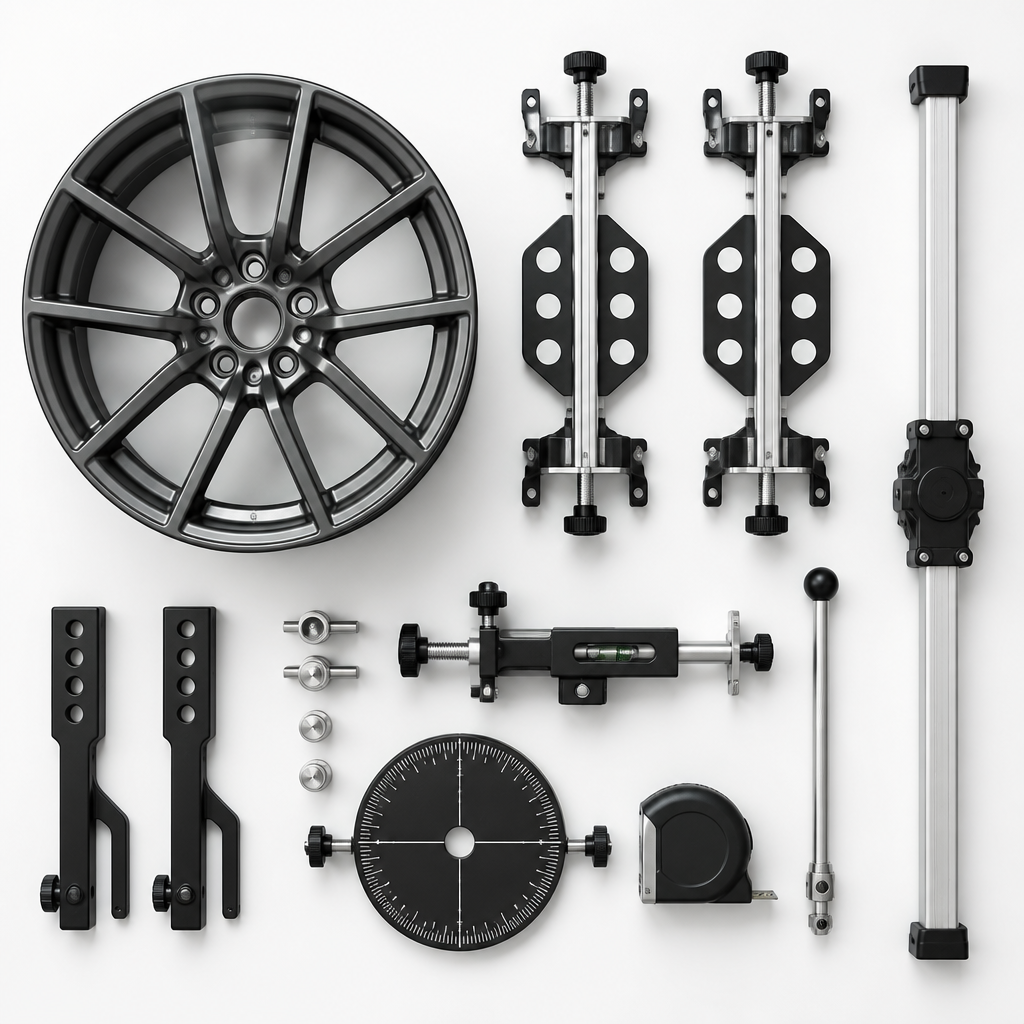
When you bring your vehicle to Car Aid for a wheel alignment at any of our Metro Detroit locations, including Rochester and Shelby Township, the process starts before the car ever goes on a lift. The technician does a visual inspection of tire wear patterns and a quick check of the steering feel during the drive into the bay. Those observations often confirm what the alignment machine will measure, and they flag any suspension issues that need to be addressed before the alignment can hold.
The vehicle then goes onto an alignment rack with sensors attached to all four wheels. The machine measures current camber, caster, and toe angles against the manufacturer’s specifications for your exact vehicle. The print-out shows you where each angle sits before the adjustment and where it lands after. That before-and-after documentation is not a formality. It shows you exactly what was wrong and confirms that the correction was made.
Why Transparent Communication Matters More Than Price
A common frustration with alignment services at some shops is walking in for a simple alignment and walking out with a long list of suspension parts you were told you need, with no explanation of what was actually measured. At Car Aid, the approach is different. If your ball joints or tie rod ends are worn to the point where they will not hold an alignment, that gets explained with the measurement data in hand, not as a verbal upsell.
If your suspension is in good shape, a standard alignment takes roughly one hour. If additional work is needed, you will know before it starts, not after. That is the standard families in Southfield, Troy, Utica, Waterford, and Rochester should expect from any shop they trust with their vehicles.
Frequently Asked Questions
Does wheel alignment affect fuel economy?
Yes, and the effect is real even if it is not dramatic on a single tank of gas. When tires are misaligned, they scrub against the road surface instead of rolling freely. That constant friction increases rolling resistance, which forces the engine to work harder to maintain speed. Correcting alignment reduces that resistance and modestly improves fuel efficiency over time. For a family vehicle driving 15,000 or more miles per year, the savings add up.
Can I tell if my alignment is off without going to a shop?
You can identify several signs yourself. Drive on a straight, level road and briefly release the steering wheel. If the car drifts consistently to one side, that is a strong indicator. Check your tires for uneven wear, particularly wear concentrated on one edge of a tire. Look at your steering wheel while driving straight. If it sits noticeably off-center, your alignment almost certainly needs attention. However, self-diagnosis only tells you that something is wrong. Only an alignment machine with calibrated sensors can measure the actual angles and confirm what needs adjustment.
Will an alignment fix my steering wheel vibration?
It depends on the cause. Steering wheel vibration at highway speeds is more often caused by tire imbalance than misalignment. However, if the vibration started after hitting a pothole and is accompanied by a pull to one side, alignment is the more likely culprit. In practice, the two services are sometimes needed together. If your technician finds both alignment and balance issues, address both. Doing only one when both are needed wastes your time and leaves the problem partially unsolved.
How much does wheel alignment cost in the Rochester MI area?
Alignment pricing varies based on vehicle type and whether a two-wheel or four-wheel alignment is performed. For the Rochester and Metro Detroit area, a standard four-wheel alignment typically falls in the range of $75 to $150 at most reputable shops. Prices outside that range, in either direction, are worth questioning. An unusually low price sometimes reflects a two-wheel service being sold when four-wheel is appropriate. An unusually high price for a vehicle with no suspension damage is worth getting a second opinion on. Always ask for a before-and-after printout to confirm the service was actually performed.
Should I get an alignment when I buy new tires?
Yes, every time. New tires represent a significant investment, and mounting them on a misaligned vehicle begins destroying that investment immediately. The wear damage from driving on misaligned new tires is irreversible. Many shops offer alignment service as part of a tire installation package precisely because the combination is so important. At Car Aid, we recommend treating alignment as a non-negotiable part of any new tire installation, not an optional add-on.
What is the difference between wheel alignment and wheel balancing?
Wheel alignment adjusts the angles at which your tires contact the road. Wheel balancing corrects the weight distribution around each wheel and tire assembly. Both services affect ride quality, but they solve completely different problems. Misalignment causes pulling, off-center steering, and uneven edge wear on tires. Imbalance causes vibration, typically felt through the steering wheel at highway speeds, and a cupping or scalloping wear pattern on the tires. You can need either one, or both, at the same time.
Have you noticed your car pulling to one side after a rough Michigan winter? Share what you experienced and how the repair turned out below.
References
- How salt and Michigan potholes damage wheel alignment and suspension components
- How Michigan’s winter roads cause alignment failures in local vehicles
- How often drivers should schedule a wheel alignment service
- Complete guide to wheel alignment: what it is and what to expect
- Understanding camber, caster, and toe alignment angles in plain language